
Teen Depression Therapy in Katy: Guide for Parents

Watching your teen pull away is one of the most painful experiences a parent can face. The vibrant, engaged child you knew might be replaced by someone withdrawn, irritable, and struggling to keep up. In a high-achieving community like Katy, it’s easy to wonder: Is this just the stress of adolescence, or is it something more? You’re not alone in asking this question, and finding the right path forward is a sign of your strength and love as a parent.
Learn how specialized, evidence-based therapy and advanced neurofeedback can help your teen overcome depression and restore hope within your family.
Table of Contents
Recognizing Teen Depression in the Katy Community: More Than Just a Phase
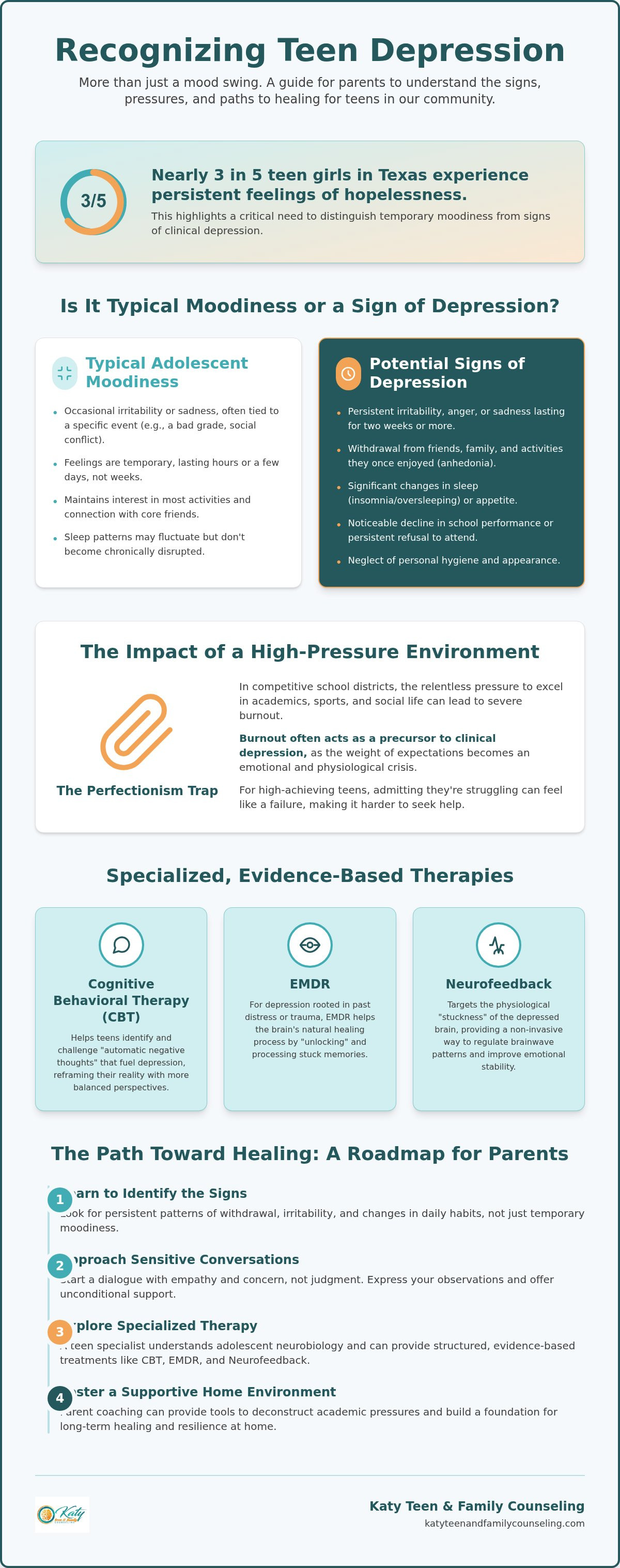
One of the greatest challenges for parents is distinguishing between the normal, often turbulent, emotional landscape of adolescence and the clinical signs of Major Depressive Disorder. While mood swings are a hallmark of the teen years, depression is a persistent state of emotional distress that impacts every facet of your child’s life—from their grades at Cinco Ranch High School to their friendships and family relationships. It’s a heavy fog that doesn’t lift on its own.
For many teens, depression doesn't look like profound sadness. Due to hormonal changes and developing brain structures, it often manifests as persistent irritability, anger, or a cynical, critical attitude. Your teen might snap at you, isolate themselves in their room, or seem constantly on edge. This isn't a character flaw; it's a common symptom of their inner struggle. They aren't trying to push you away—they are overwhelmed by feelings they can't articulate or control.
This is compounded by the unique stressors facing students in Katy ISD. The intense academic competition, the pressure to build a perfect college resume, and the relentless highlight reels of social media create an environment where teens feel they can never measure up. This "perfectionism trap" can become a breeding ground for anxiety and depression, where any perceived failure feels catastrophic.
[Infographic: A two-column visual comparing "Typical Teen Moodiness" (e.g., temporary sadness after a breakup, occasional bad attitude, frustration over homework) with "Clinical Depression Warning Signs" (e.g., persistent hopelessness for over two weeks, complete withdrawal from beloved activities, significant changes in sleep/appetite, drop in grades).]
Common Signs and Symptoms to Watch For
While every teenager is different, certain patterns often indicate that professional support is needed. It’s crucial to look for a constellation of changes, not just a single bad week. Be observant for:
Significant shifts in foundational habits: This includes dramatic changes in sleep patterns (sleeping all the time or struggling with insomnia), appetite (eating much more or less than usual), or a sudden lack of concern for personal hygiene.
Social and extracurricular withdrawal: Your teen may suddenly drop a sport they once loved, stop hanging out with their long-term friend group, or spend nearly all their free time alone in their room. They may say they are "too tired" or that "it's not fun anymore."
A noticeable decline in academic performance: For a high-achieving teen, this is often a major red flag. A sudden drop in grades, missing assignments, or expressing a complete lack of motivation for schoolwork can signal a deeper issue than simple academic stress.
The Impact of Katy’s High-Pressure Environment
In communities like Katy, where academic excellence is the norm, the pressure can be immense. The drive to succeed at schools like Seven Lakes or Tompkins High School can be a powerful motivator, but it can also fuel a dangerous cycle of burnout and depression. The "perfectionism trap" convinces teens that their worth is tied directly to their achievements—their GPA, their extracurriculars, their social standing.
When this pressure becomes overwhelming, a teen’s coping mechanisms can break down. What starts as burnout—exhaustion and cynicism about school—can evolve into clinical depression. They may feel trapped, believing that they can't slow down without failing, yet feeling too exhausted to continue. This is where specialized teen counseling in Katy becomes not just helpful, but essential for navigating the storm.
Specialized Clinical Approaches to Adolescent Depression
Helping a teenager navigate depression requires more than just a listening ear. While a strong therapeutic relationship is the foundation of healing, effective treatment moves beyond generic "talk therapy" to incorporate evidence-based interventions designed specifically for the adolescent brain. Our approach at Katy Teen & Family Counseling is built on specialized modalities that empower teens to understand and change the patterns that keep them stuck.
One of the cornerstones of our work is Cognitive Behavioral Therapy (CBT). This practical, goal-oriented approach helps teens identify, challenge, and reframe the distorted, negative thought patterns that fuel depression. A depressed brain often falls into cognitive traps, such as catastrophizing (assuming the worst-case scenario) or all-or-nothing thinking (seeing things in black and white). CBT provides teens with concrete tools to break these cycles and build a more balanced, realistic perspective.
[Image: A bright, comfortable, and modern therapy office at Katy Teen & Family Counseling, featuring soft lighting, comfortable armchairs, and tasteful decor, designed to feel like a safe and welcoming space rather than a sterile clinical environment.]
Cognitive Behavioral Therapy (CBT) and EMDR
In a CBT session, a therapist helps your teen become a detective of their own thoughts. They learn to spot the "automatic negative thoughts"—like "I'm a failure" or "No one likes me"—that trigger feelings of sadness and hopelessness. By examining the evidence for and against these thoughts, they can develop more compassionate and accurate self-talk, which directly impacts their mood and behavior.
For some teens, depression is linked to underlying difficult experiences or trauma that they haven't fully processed. In these cases, Eye Movement Desensitization and Reprocessing (EMDR) can be a powerful tool. EMDR helps the brain reprocess traumatic memories that are "stuck," allowing the teen to heal from the emotional charge of past events. In essence, EMDR helps unlock emotional progress in teens by allowing their brain's natural healing process to resolve distressing memories that may be manifesting as depressive symptoms.
Why a 'Teen Specialist' Matters
The adolescent brain is unique, and so are the challenges teens face. A counselor who primarily works with adults may not have the specific training or relational style to connect with a teenager who is skeptical, resistant, or struggling to open up. A teen specialist understands the nuances of adolescent development, the importance of building rapport through authenticity and respect, and how to navigate sensitive topics like peer pressure, identity, and family conflict.
Building a strong therapeutic alliance—a relationship of trust and collaboration—is the single most important predictor of success in therapy. Our clinicians are hired specifically for their expertise and passion for working with adolescents. They know how to create a space where your teen feels seen, heard, and understood, making them more willing to engage in the hard work of healing.
Beyond Talking: How Neurofeedback Targets the 'Depressed Brain'
Sometimes, depression isn't just an emotional or cognitive problem; it's a physiological one. The adolescent brain can get "stuck" in low-energy, low-motivation states. Depressive rumination—the cycle of repetitive negative thoughts—has a corresponding pattern in the brain's electrical activity. While talk therapy is crucial for processing emotions and learning new skills, we also need to address the underlying biology. This is where neurofeedback comes in.
Neurofeedback is a cutting-edge, non-invasive form of brain training that helps regulate mood at a biological level. It provides the brain with real-time feedback on its own activity, allowing it to learn how to shift out of inefficient patterns (like those associated with depression) and into more balanced, resilient states. It's a powerful tool that complements traditional therapy by addressing the physiological roots of your teen's struggle.
[Image: A clear, professional photo of the neurofeedback equipment in use. A teenager is seated comfortably in a chair, watching a screen with a movie or simple game. Small, non-invasive sensors are on their scalp. The image should convey a sense of safety, calm, and modern technology.]
The Science of Brain Training
During a neurofeedback session, we place sensors on the scalp to read the brain's electrical signals (brainwaves). These signals are then translated into visual or auditory feedback on a screen—for example, a movie might play clearly when the brain is in a desired state and dim when it shifts into a less optimal pattern. The brain, wanting the reward of the clear movie, naturally begins to adjust its activity.
We can identify specific brainwave patterns associated with depressive rumination, low motivation, and emotional dysregulation. Through this process of operant conditioning, neurofeedback trains the brain to produce more of the calm, focused, and stable patterns. Think of it as physical therapy for the brain's electrical patterns, strengthening its ability to self-regulate and maintain a positive mood.
Synergy Between Counseling and Neurofeedback
The combination of talk therapy and neurofeedback creates a powerful synergy. When a teen's brain is better regulated, they are more capable of engaging in the deeper emotional work of counseling. They have more mental energy, their thinking is clearer, and they are less overwhelmed by intense emotions. This physiological regulation makes talk therapy more effective and efficient.
By training the brain to be more resilient, we also help build long-term stabilization that reduces the likelihood of future depressive relapses. The goal of neurofeedback for teen depression is not just to manage symptoms, but to fundamentally change the brain's ability to cope with stress, paving the way for lasting emotional health.
The Path Toward Healing: What Katy Parents Can Expect
Taking the first step toward getting help for your teen can feel daunting, but you don't have to navigate this journey alone. Our process is designed to be clear, collaborative, and supportive for the entire family. It begins with empowering you, the parent, to open a conversation with your teen in a way that fosters connection rather than conflict.
When approaching your teen, use "I" statements to express your concern (e.g., "I've noticed you seem really down lately, and I'm worried about you") rather than "you" statements that can sound accusatory ("You need to go to therapy"). Frame it as getting support for the whole family to learn better ways to communicate and handle stress. Reinforcing that this is a team effort can help reduce defensiveness. Throughout the process, Parent Coaching can provide you with strategies to reinforce therapeutic progress at home, helping you become a more effective ally in your child's healing.
[Image: A hopeful and authentic photo of a parent and teen reconnecting. They could be sharing a quiet, positive moment on a walk in a Katy park, sitting together on a couch talking, or sharing a gentle smile. The focus is on connection and warmth.]
Navigating the Intake Process
We've streamlined our intake process to ensure your family feels supported from the very first call. We understand you're in a difficult place, and our goal is to provide clarity and hope right away.
Step 1: The Initial Phone Consultation. You'll speak with one of our intake coordinators for a complimentary 15-minute call. This is a chance for you to share your concerns and for us to determine if our specialized services are the right clinical fit for your family's needs.
Step 2: The Comprehensive Intake Session. Your first appointment will be a thorough session where we gather a detailed family history, understand the specific challenges your teen is facing, and collaboratively set initial goals for therapy.
Step 3: Pairing Your Teen with a Specialist. Based on the intake, we will thoughtfully match your teen with one of the therapists from our team of Katy specialists. We consider personality, clinical needs, and therapeutic style to create the best possible alliance for success.
Rebuilding the Family Connection
The ultimate goal of teen depression therapy is not just to alleviate symptoms, but to help your family move from a state of crisis to one of growth and shared resilience. Therapy provides a space to rebuild communication, restore trust, and rediscover the joy in your relationship with your child.
As a private-pay practice, we are able to offer a level of care and confidentiality that is often not possible within the constraints of insurance networks. This model allows us to focus entirely on your family's unique needs, providing highly personalized, specialized care without the limitations of mandated diagnoses or session limits. It ensures that your family's journey toward healing is our one and only priority.
Frequently Asked Questions About Teen Depression Therapy
How can I tell if my teen is clinically depressed or just stressed by school?
The key differences are duration, severity, and impact. School stress may cause temporary irritability or sadness around exams, but it typically subsides. Clinical depression is a persistent state (lasting two weeks or more) of low mood, irritability, and loss of interest that significantly impairs your teen's ability to function at school, with friends, and at home.
What makes teen depression therapy different from adult counseling?
Teen therapy requires a specialist who understands adolescent brain development, social dynamics, and family systems. It often involves more creative and activity-based approaches to build rapport and may include more family involvement and parent coaching to ensure progress is supported at home.
How long does it typically take to see progress in teen depression therapy?
While every teen's journey is unique, many families begin to see small, positive shifts within the first 4-6 weeks, such as improved communication or slightly better mood regulation. Significant, lasting change is a longer process that requires consistent commitment to therapy, but a clear path toward progress is established early on.
What should I do if my teen refuses to attend therapy sessions?
This is a common concern. Start by validating their feelings ("I hear that you don't want to go") and then hold a firm, loving boundary ("This is something we need to do for our family's health"). Sometimes, the first few sessions focus on the parent-therapist relationship, developing strategies to help the teen feel more comfortable and willing to engage.
Do you offer family sessions alongside individual teen therapy in Katy?
Absolutely. We believe that healing happens within the context of the family. While your teen will have individual sessions, we frequently incorporate family therapy and parent coaching to improve communication, resolve conflicts, and ensure the entire family system is growing stronger together.


Comments