
EMDR Therapy for Teen Anxiety in Katy, TX: When It May Help


When a teen's anxiety keeps returning to a frightening or embarrassing experience, advice to "stop worrying" rarely helps. EMDR therapy for anxiety may be worth considering when a memory still triggers panic, avoidance, or the feeling that danger is close. But it is not automatically a better choice than cognitive behavioral therapy (CBT) for every anxious teen.
At Katy Teen & Family Counseling, we help families in Katy and the greater Houston area sort out which treatment fits the pattern behind a teen's anxiety. If you're exploring teen anxiety therapy in Katy, start with this question: Is the anxiety tied to a distressing memory, or does worry spread across many parts of daily life?
What Is EMDR Therapy, and When Does It Fit Teen Anxiety?
EMDR stands for Eye Movement Desensitization and Reprocessing. A trained therapist helps a client focus on a distressing memory while using bilateral stimulation, such as guided eye movements, taps, or alternating sounds. Treatment also includes planning, coping skills, and follow-up. The goal is not to erase the memory, but to reduce the distress attached to it.

Consider a teen who avoids the school bus after a crash. The sound of brakes brings back the accident, and the thought "I'm not safe" feels true again. That gives an EMDR therapist a specific memory and trigger to assess. EMDR may also be considered when a humiliating experience continues to drive social avoidance or when anxiety occurs alongside trauma symptoms. Read more about trauma therapy for teens in Katy and signs that may point to complex PTSD. A clinician can assess whether either description fits your teen.
By contrast, if your teen worries about grades, friendships, health, and the future without a clear memory driving the fear, CBT and skills-based treatment may be a better starting point. Panic and social anxiety can involve both patterns. For situation-specific nerves, families may also look for immediate coping ideas, such as managing stress after air travel, while seeking professional help if avoidance persists.
For a quick explanation of memory-driven reactions and everyday worry, watch this video:
Does EMDR Work Better Than CBT for Anxiety?
EMDR can help anxiety, but the evidence does not justify promising that it works better for every teen. An umbrella review in Frontiers in Psychiatry pooled 11 meta-analyses and found a moderate overall reduction in anxiety symptoms (Hedges' g = -0.63). Its estimate against active psychological treatments was smaller (g = -0.36), and the authors reported important variation and limitations in the underlying evidence.
What Happens During an EMDR Session?
EMDR follows eight phases: history and planning, preparation, assessment, desensitization, installation of a more helpful belief, body scan, closure, and reevaluation. A therapist should establish ways to manage distress before starting memory processing.
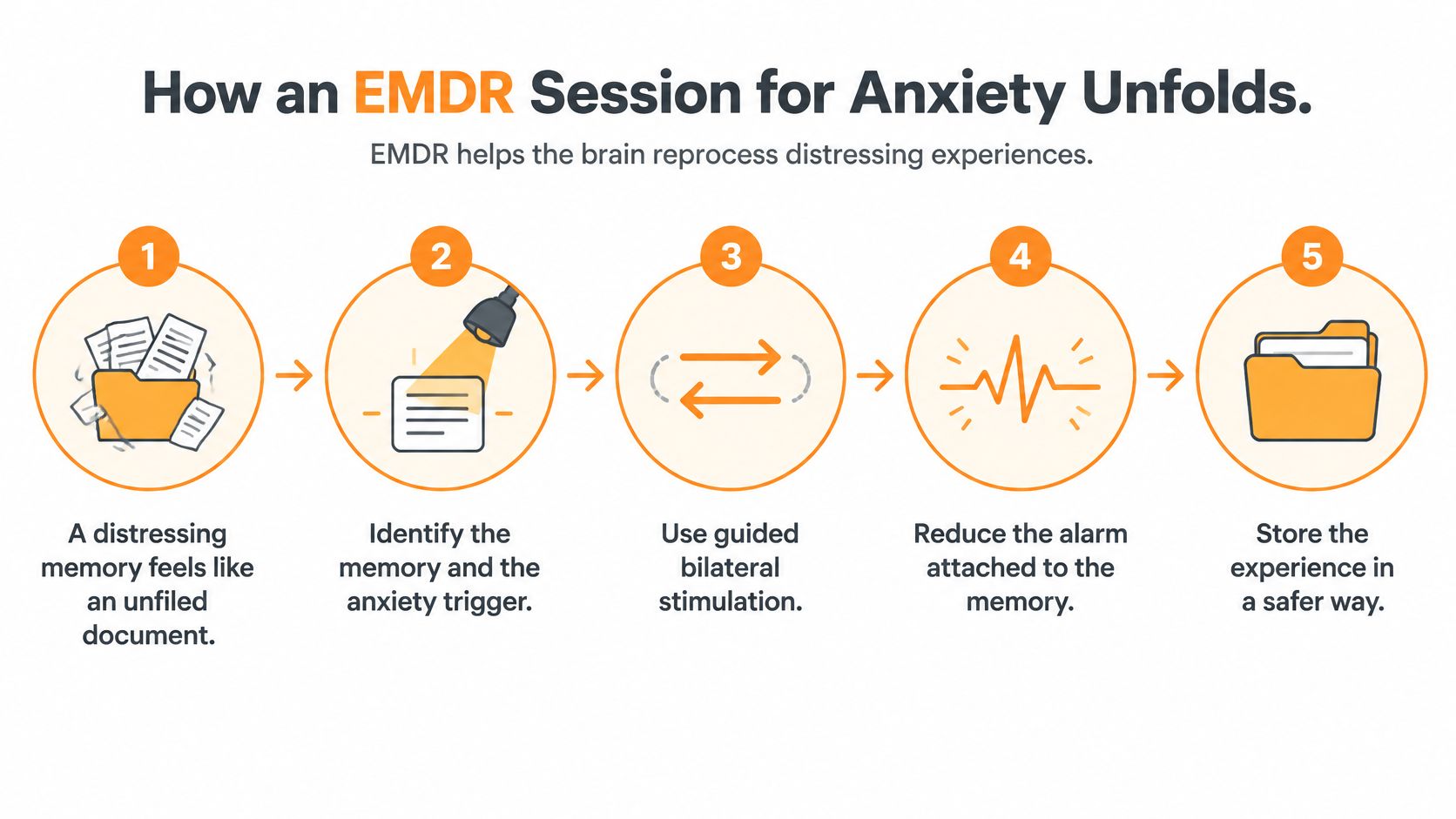
During processing, your teen notices a target memory while the therapist guides brief sets of eye movements, taps, or tones. They can pause, and they do not have to describe every detail aloud. The therapist checks distress, closes the session at a stable point, and revisits the target later to see what has changed. Parents can ask about the treatment plan and progress without expecting a full account of private session details.
How Long Might EMDR Take?
At our practice, 8 to 12 sessions is a typical starting estimate for EMDR therapy for anxiety, not a guaranteed finish date. One isolated memory may take less work than years of bullying or several overlapping stressors. Some clients need a longer course.
Look for changes beyond a lower distress rating: Is your teen returning to the bus, staying at school, sleeping better, or recovering more quickly after a trigger? Agree on a reassessment point around four to six sessions. If daily functioning is not improving, ask whether the target, pacing, or treatment plan needs adjusting. EMDR may be combined with CBT or family work when current stressors need attention too. Our overview of trauma therapy options for teens can help you prepare for that discussion.
Finding an EMDR Therapist for Teens in Katy
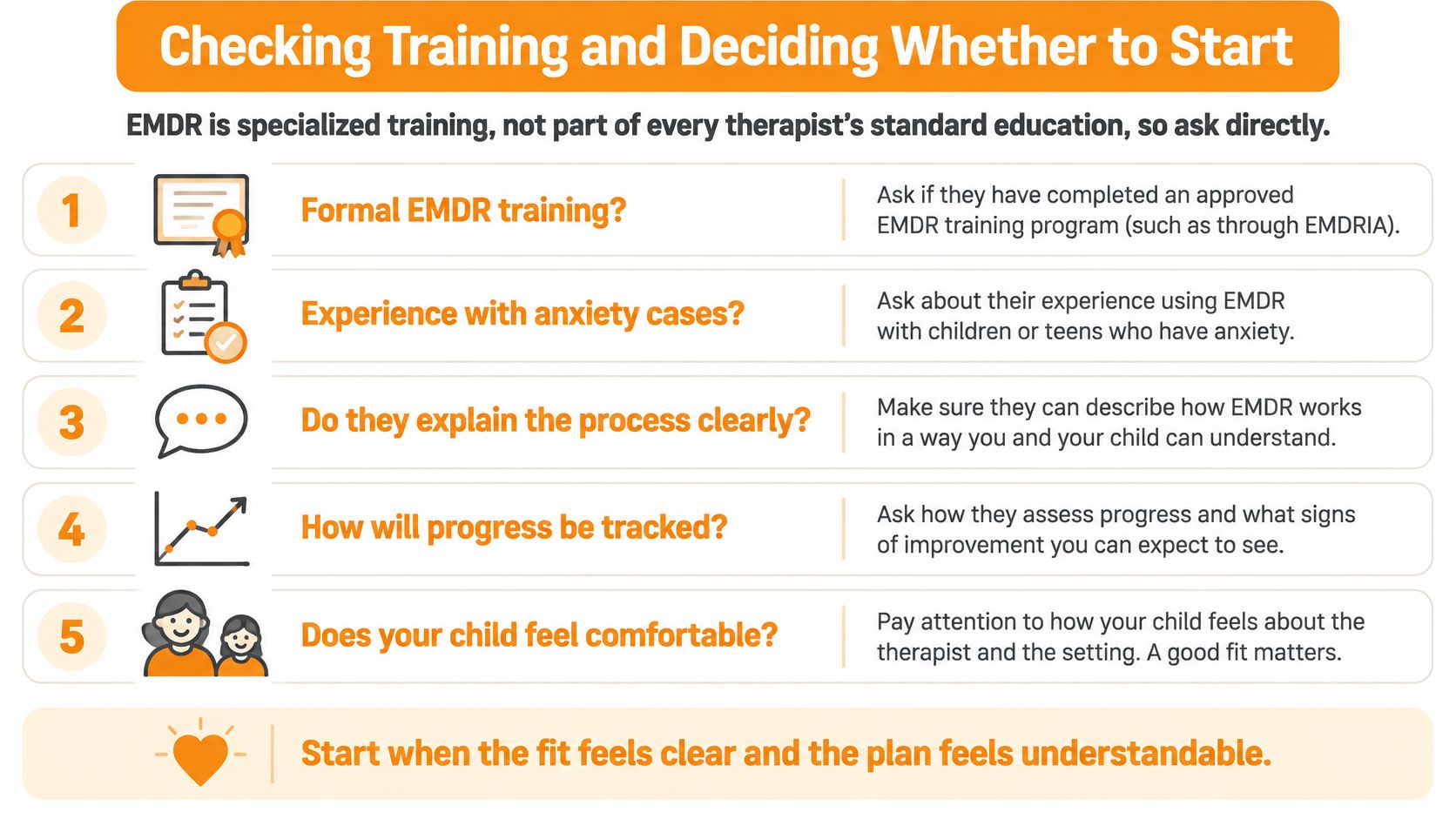
Before booking, ask whether the clinician has formal EMDR training, works with teens, and can explain how they decide a client is ready for processing. Ask what happens if your teen becomes overwhelmed and how progress will be measured.
Katy Teen & Family Counseling uses EMDR with teen anxiety, panic attacks, social anxiety, and trauma-related concerns. We also offer teen counseling and other services when memory work alone is not the right plan. The practice is private-pay and does not accept insurance. A good first conversation should leave you with a clear target, an explanation of your options, and a way to check whether treatment is helping.
Take the Next Step for Your Teen
If anxiety keeps pulling your teen back to an accident, bullying experience, frightening event, or painful belief, you do not have to decide on EMDR alone. Contact Katy Teen & Family Counseling to discuss whether EMDR, CBT, or a combined approach may fit your teen's needs in Katy or the greater Houston area. Visit our Contact Us page, call or text 281-519-6364, or email info@katyteenandfamilycounseling.com. Bring the triggers you have noticed so we can begin with a focused conversation and a measurable plan.
About the Author

Jason Drake, LCSW, BCN-L is the owner and lead clinician of Katy Teen & Family Counseling in Katy, Texas. Since 2003, he has worked with teens, young adults, and families facing anxiety, panic, trauma, bullying, and school stress. Jason is EMDR trained, a BCIA Associate Fellow in neurofeedback, and a Certified Brain Health Professional through the Amen Clinics. His writing focuses on helping families understand treatment options and take practical next steps. Read more of his teen mental health articles or ask about an appointment.


Comments