
Trauma Therapy for Teens in Katy, TX: EMDR, ART, and What Parents Should Know


After a frightening experience, your teen may have nightmares, avoid familiar places, withdraw from friends, or seem constantly on edge. You may want to help without pushing them to talk before they are ready. If these changes are affecting daily life, teen trauma counseling in Katy, TX can be a place to start.
Trauma therapy helps teens make sense of their reactions and regain a sense of safety. It does not require them to tell a parent, or a therapist, every detail at once.
When should a teen see a trauma therapist?
An accident, loss, violence, abuse, medical emergency, or bullying can affect sleep, mood, school, friendships, and family life. Not every teen develops PTSD, but recurring memories, avoidance, and feeling constantly on guard are reasons to seek an assessment. You do not need to wait for a diagnosis if your teen is struggling or unsafe.
Ask whether the individual clinician has experience with adolescent trauma and how they adapt treatment to a teen's needs. The National Child Traumatic Stress Network provides background on established youth trauma care, and NICE guidance for PTSD in young people can help families understand treatment recommendations.
Families in Katy and greater Houston can explore teen counseling and ask which approach fits their teenager.
EMDR and ART for teens: What is the difference?
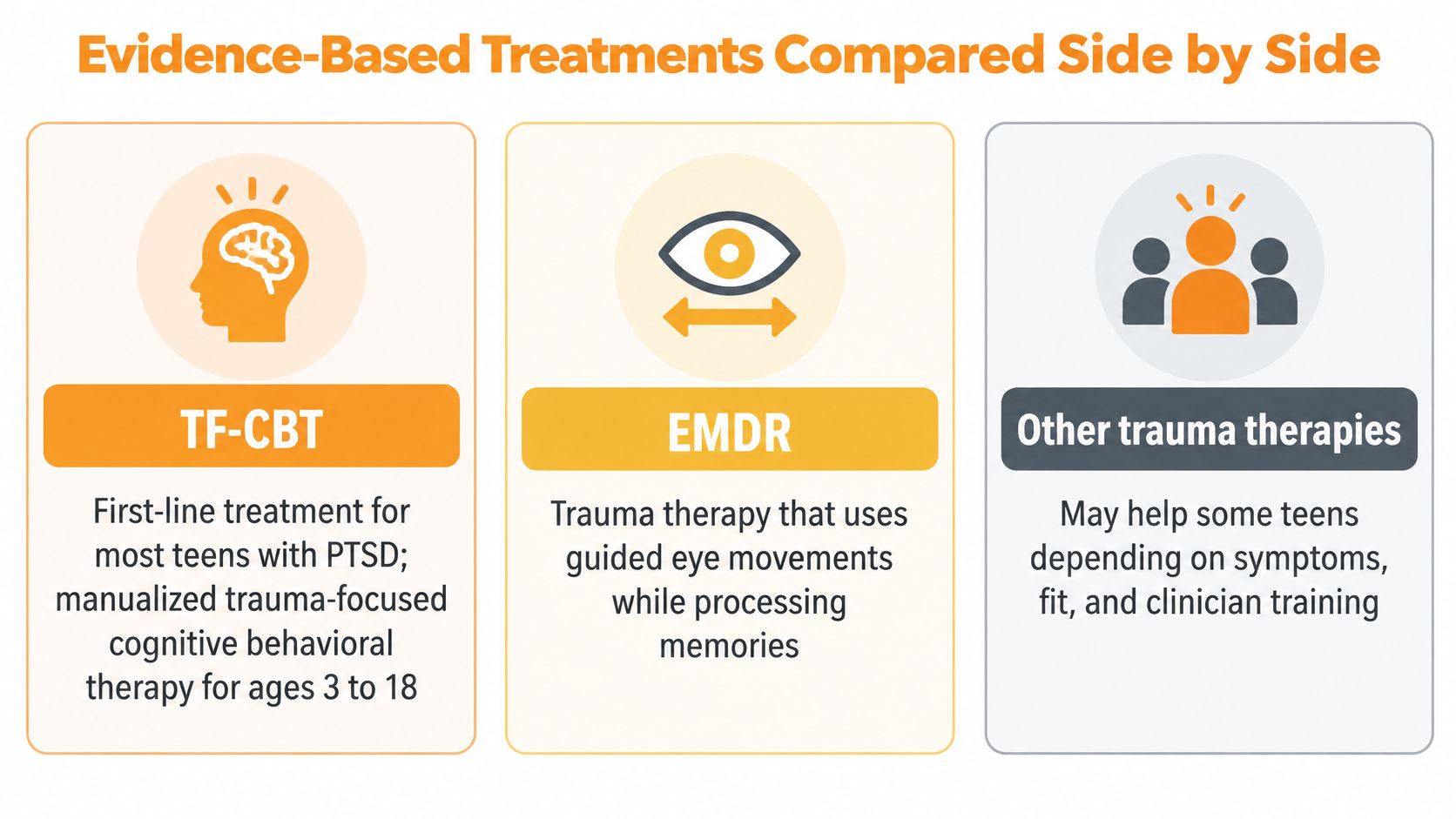
EMDR (Eye Movement Desensitization and Reprocessing) is a structured trauma-focused therapy that may help a teen process distressing memories. Its suitability depends on the teen's symptoms, safety, and willingness to participate. NICE recommends considering EMDR for young people ages 7-17 with PTSD symptoms more than three months after trauma when they do not respond to or engage with the guideline's preferred treatment. A 2025 review of EMDR studies in children and adolescents found promising results. Read our guide to EMDR for teens and young adults.
ART (Accelerated Resolution Therapy) also uses eye movements and may involve working with distressing images without describing every detail aloud. Katy Teen & Family Counseling includes ART among its counseling approaches. Research on ART specifically for adolescents remains limited, so parents should ask about a clinician's training, whether ART fits their teen, and how progress will be assessed. It should not be presented as equally established for teens or as a guaranteed fast solution.
Neurofeedback may be discussed for concerns such as regulation, attention, or sleep, but it is not an equivalent replacement for a trauma-focused PTSD treatment. If you are considering neurofeedback services, ask how they fit into the overall care plan.
A King's College London summary of a 2024 analysis offers context on the wider youth PTSD treatment literature. No single study can determine the right approach for your teen.
What happens in teen trauma therapy?
A therapist typically starts by checking safety, learning how symptoms affect daily life, and agreeing on goals with the teen. Sessions may begin with coping skills before moving toward difficult memories at a manageable pace. NICE describes a range of treatment lengths, but your teen's plan should not follow an arbitrary deadline. Grounding techniques for teens can help with distress between sessions, though they do not replace treatment or a safety assessment.
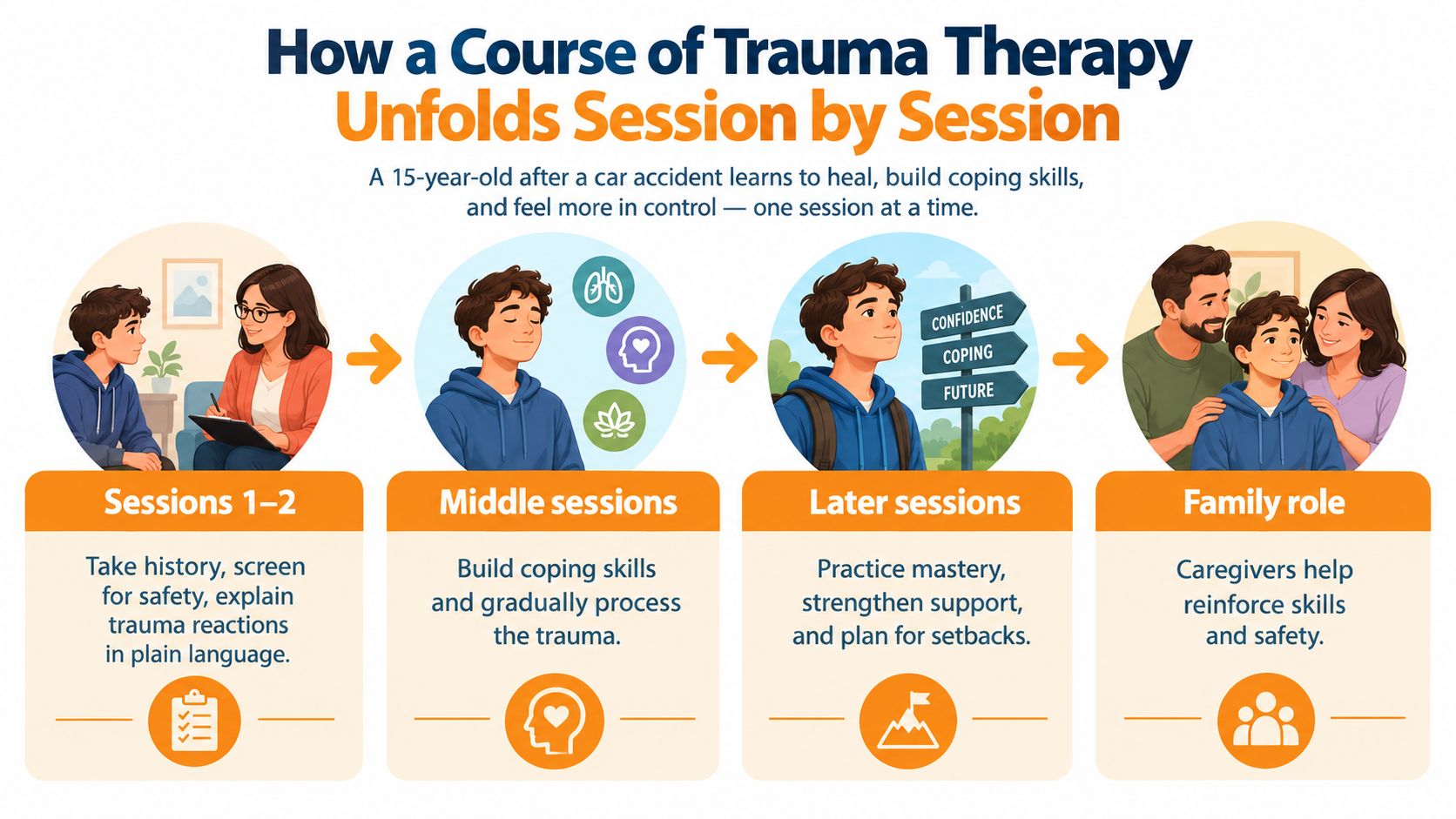
Parents may learn how to support their teen without requiring them to share every detail. An unsafe caregiver should never be involved in a way that increases risk.
Can therapy bring up difficult feelings?
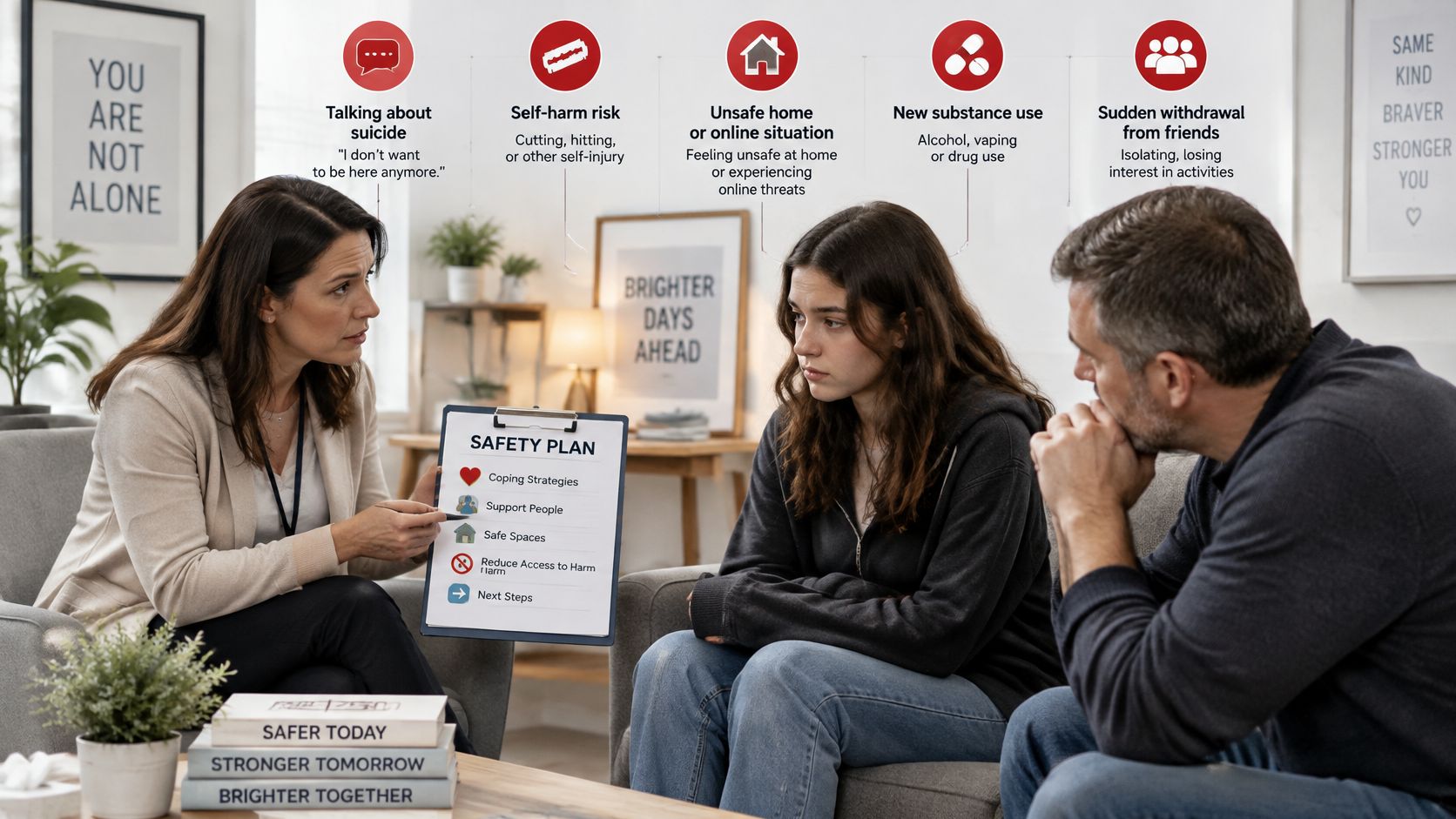
Sometimes. Tell the therapist if your teen's sleep, school functioning, or sense of safety worsens, or if self-harm thoughts appear. The plan may need to change. International Society for Traumatic Stress Studies guidance discusses outcomes and access to youth trauma care, while a 2022 Cochrane review found that psychological therapies can reduce PTSD symptoms compared with control conditions. Neither source predicts an individual teen's response.
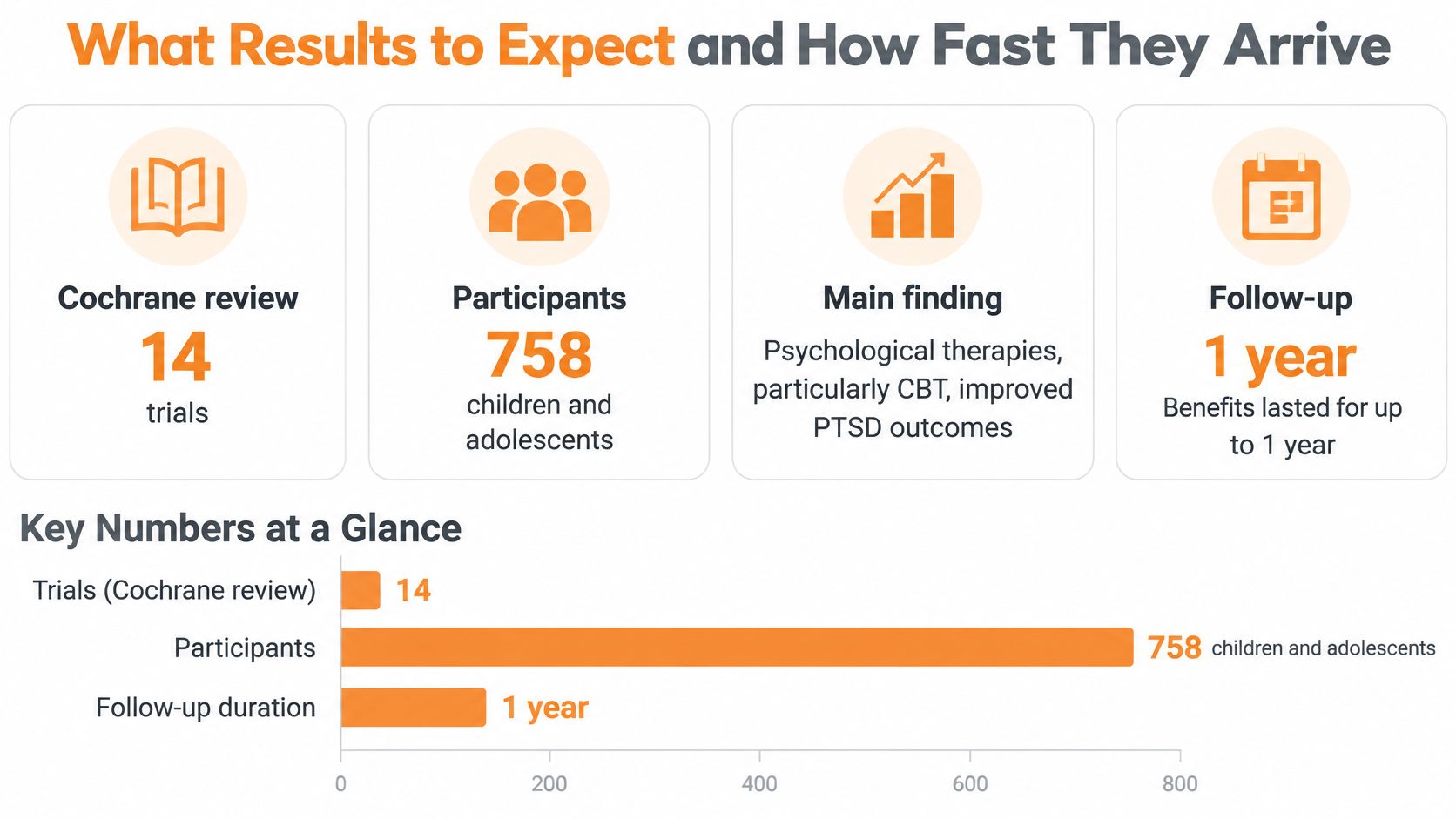
A 2025 statewide youth trauma treatment implementation study adds context about routine care. What matters most at home is whether your teen is beginning to sleep better, reconnect with friends, and manage everyday activities.
What if your teen is not improving?
Ask what symptoms are being tracked, whether safety or other concerns need attention, and when the therapist will reassess the plan. A JMIR Research Protocols article examines treatment dropout and an intensive youth trauma care model under investigation; it is not a standard shortcut to recovery.
Safety comes first: If your teen faces immediate danger, call 911. For suicidal thoughts or an emotional crisis in the United States, call or text 988. If safe, stay with a teen who may act on suicidal thoughts and reduce access to lethal means.
Finding teen trauma therapy in Katy, TX
When contacting a therapist, ask about their teen trauma training, experience with EMDR or ART, caregiver involvement, and how they measure progress. Our specialist versus generalist counseling guide can help you prepare questions. If your teen has sensory or communication needs, mention them ahead of time; Guiding Growth's first appointment planning guide offers additional prompts. You can also review Katy Teen & Family Counseling's counseling approaches.
Katy Teen & Family Counseling serves teens and families in Katy and the greater Houston area. The contact page lists the office at 23410 Grand Reserve Drive, Suites 401, Katy, TX 77494. Ask about the individual clinician's qualifications and recommended treatment.

Watch this introduction to get a feel for the practice:
Ready to find support for your teen?
You do not need to choose a treatment on your own. Tell us what has changed and ask whether EMDR, ART, or another approach may fit your teen's needs. To discuss trauma therapy for teens in Katy and greater Houston, visit our Contact Us page, call or text 281-519-6364, or email info@katyteenandfamilycounseling.com.
About the Author

Jason Drake, LCSW, BCN-L, is the owner and lead clinician of Katy Teen & Family Counseling in Katy, Texas. Since 2003, he has worked with teens, young adults, and families facing trauma and related concerns, including anxiety, panic, bullying, school stress, and relationship challenges. His experience informs his writing for parents seeking thoughtful support for their teens.
Jason is trained in EMDR, board certified in neurofeedback as an Associate Fellow through BCIA, and a Certified Brain Health Professional through the Amen Clinics. He also supports therapy teams and teen residential treatment centers. Read more of his teen mental health articles, or ask about an appointment.


Comments