
Neurofeedback for PTSD in Katy, TX: A Healing Guide


What if your teen's struggle with trauma isn't a lack of willpower, but a brain that's simply forgotten how to feel safe? You've likely watched them navigate the exhausting cycle of flashbacks and hypervigilance, perhaps feeling frustrated that traditional "masking" behaviors or medications don't reach the underlying pain.
Finding effective neurofeedback for PTSD Katy, TX can be the turning point your family needs. We understand that you want a clear, evidence-based path to help your child feel regulated in their own body again.
In this guide, you'll learn how advanced 19-channel neurofeedback retrains the brain's survival response to help teens and young adults move past trauma. We will explore how this specialized technology moves beyond surface-level symptoms to foster deep, long-term recovery and true peace of mind.
Table of Contents
The Physiology of Trauma: Why PTSD 'Sticks' in the Developing Brain
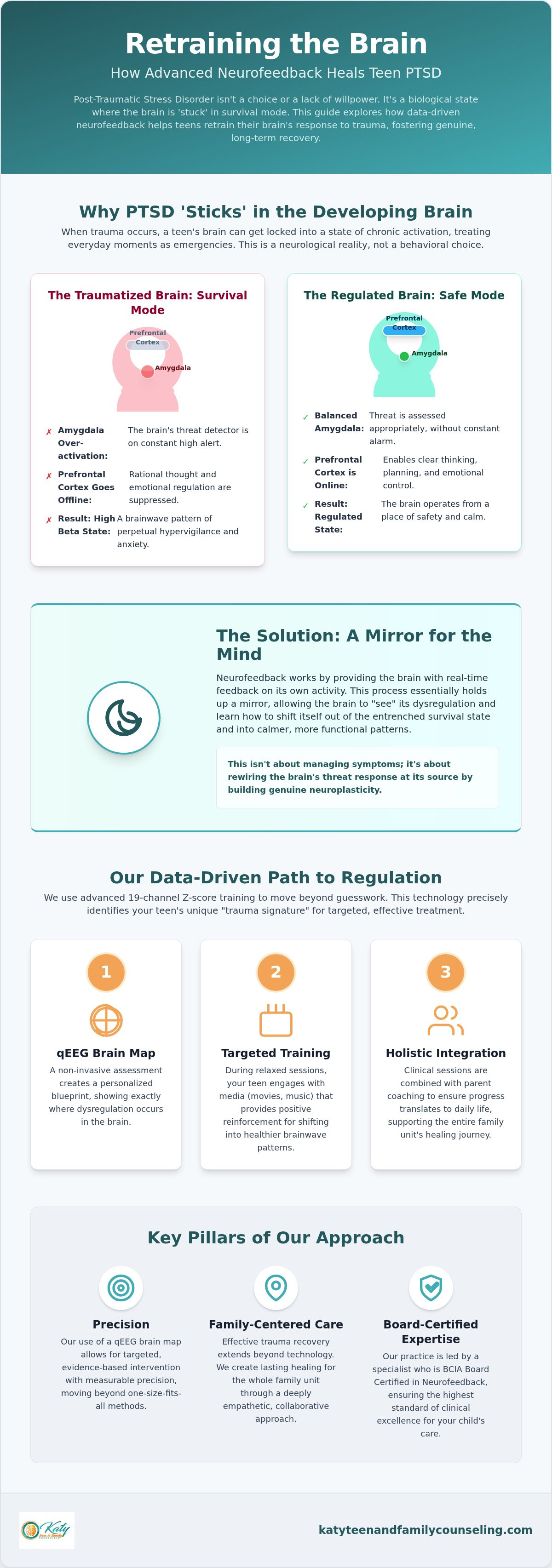
PTSD isn't a choice, and it isn't weakness. It's a biological state of stuckness rooted deep in the brain's survival architecture. When a teen experiences trauma, the amygdala, the brain's threat-detection center, can become locked in a state of chronic activation. Even after the danger has passed, the nervous system continues to treat ordinary moments as emergencies.
The prefrontal cortex, which is responsible for rational thought, emotional regulation, and perspective-taking, essentially goes offline whenever the amygdala fires. For a developing brain, this disruption is especially significant because the neural pathways being formed during adolescence will shape how that young person regulates stress for years to come.
This is what clinicians often describe as the High Beta state: a pattern of fast, high-amplitude brainwave activity concentrated in the right hemisphere that keeps the brain perpetually scanning for threat. Your teen isn't overreacting. Their brain has been recalibrated by experience to treat the world as inherently unsafe.
This is also why talk therapy alone frequently falls short. When the brain is locked in survival mode, the language-processing centers are suppressed. A teen sitting across from a therapist may genuinely want to engage, but their neurobiology makes deep verbal processing nearly impossible in that state. You're not imagining the frustration. The barrier is neurological, not motivational.
Neurofeedback as a Mirror for Self-Regulation
Neurofeedback for trauma works by giving the brain real-time feedback about its own activity patterns, essentially holding up a mirror to the dysregulation. Curious about the science behind it? What is Neurofeedback? offers a clear foundational overview.
Through repeated training sessions, the brain learns to shift out of that entrenched High Beta survival state and into calmer, more regulated patterns. This process builds genuine neuroplasticity, rewiring the threat response at its source rather than simply managing symptoms on the surface.
For families exploring neurofeedback for PTSD in Katy, TX, this represents a meaningful departure from approaches that only address behavior. Paired with our specialized trauma therapy, neurofeedback becomes part of a comprehensive path toward lasting recovery.
How Z-Score Neurofeedback Targets PTSD: The Katy Teen & Family Approach
Precision is the cornerstone of effective trauma recovery. While some methods like LENS offer passive feedback, our use of 19-channel Z-score training provides a high-resolution, active training environment. This advanced technology allows us to identify the specific "trauma signature" unique to your teen's experience.
By comparing their real-time data to a normative database of healthy brain patterns, we can pinpoint exactly where dysregulation occurs. This data-driven precision is why neurofeedback for ptsd Katy, TX at our practice offers a more targeted and efficient path to healing than generic alternatives.
The Path to Regulation: What a Typical Session Looks Like
When you choose neurofeedback, you deserve to know exactly what happens behind the clinic doors. The process begins at our Grand Reserve Drive office with a qEEG brain map. This non-invasive assessment serves as a blueprint, allowing us to create a customized protocol tailored to your teen's specific neurological needs.
During the training sessions, your teen simply relaxes in a comfortable chair while engaging with visual or auditory rewards, such as a favorite movie or music. When their brain waves move toward a healthier, more regulated state, the media plays clearly. If their brain drifts back into a survival pattern, the feedback changes. This repetitive reward system teaches the brain to actively find its own way back to calm.
We believe that lasting change requires a supportive home environment. We integrate these clinical sessions with parent coaching where applicable to ensure the progress made in our office translates to daily life. This collaborative approach helps the whole family navigate the journey toward recovery together.
If you're looking for a specialized partner in your child's healing, you can connect with our specialists to learn more about our evidence-based approach.
Beyond Brain Training: A Holistic Recovery for Katy Families
Clinical excellence is the foundation of everything we do, especially when it involves a young person's developing brain. Our practice is led by Jason Drake, LCSW, BCN-L, who is BCIA Board Certified in Neurofeedback. This certification represents a gold standard for safety and clinical precision, ensuring your family receives the highest level of care.
When families seek neurofeedback for PTSD Katy, TX, this specialized expertise distinguishes our approach from general counseling centers. We operate on a private-pay model because it allows for unhurried, highly specialized sessions that prioritize your teen's unique needs over insurance-driven timelines.
Compassion guides our clinical work. We blend high-level technology with what we call our "Warm Expert" model, creating a rhythmic balance between clinical authority and deep, humanizing empathy. We don't just see data points on a screen; we see a young person who deserves to feel safe in their own body. Our "Calm Harbor" office environment in Katy serves as a steadying presence for families navigating the storm of trauma. Whether your teen is struggling with hypervigilance or withdrawal, we act as a collaborative partner meeting them exactly where they are.
Investing in a Successful Adulthood
Healing trauma during the teenage years is a profound investment in your child's future. When we reduce symptoms like chronic anxiety or disrupted sleep, we clear the biological path for academic and social success. Addressing these neurological patterns early helps prevent more complex emotional challenges in the young adult years.
Our mission is to foster the "Wildly Successful Adult" within every teen by providing the steady foundation they need to thrive. You can schedule a consultation with our specialized neurofeedback team to learn more about neurofeedback for PTSD Katy, TX and begin this journey today.
A New Chapter of Healing Starts Here
Your teen doesn't have to remain trapped in the physiological loop of hypervigilance and fear. We've explored how trauma creates a biological "stuckness" and how advanced 19-channel Z-score technology provides the precision needed to retrain those survival responses. By choosing neurofeedback for PTSD Katy, TX, you're opting for a path that prioritizes your child's long-term self-regulation and safety.
Our approach, led by a BCIA Board Certified specialist, combines clinical excellence with the deep empathy your family deserves during this transition.
We're committed to helping your teen rediscover their strength and navigate toward a successful, regulated adulthood. Whether they're struggling with sleep, panic, or withdrawal, a steady and evidence-based solution is within reach.
Take the First Step Toward Healing: Contact Us Today. You've navigated the storm this far; let us help you find the calm harbor.
Frequently Asked Questions
Is neurofeedback safe for a teen with severe PTSD?
Neurofeedback is a safe, non-invasive intervention for adolescents. It doesn't introduce electrical currents into the brain; instead, it simply monitors brainwave activity and provides real-time feedback. This makes it an excellent option for teen therapy, especially for those whose nervous systems are already overwhelmed. It allows the brain to find calm without the risks associated with more invasive procedures.
How many sessions of neurofeedback are typically needed for trauma?
Most families see the best results with on average with 40 sessions. While every brain is unique, trauma recovery often requires this duration to create lasting neurological shifts. We monitor progress through periodic mapping to ensure the training remains effective. This methodical approach to neurofeedback ensures we're consistently moving toward the goal of long-term emotional stability and resilience.
Can neurofeedback replace medication for my child's PTSD?
We don't provide medication management at our practice. While neurofeedback for PTSD Katy, TX can significantly improve self-regulation, any changes to a medication regimen must be handled by your child's prescribing physician. Many parents find that as the brain becomes more regulated, they can have informed conversations with their doctor about the long-term role of psychiatric prescriptions.
Will my child have to talk about their trauma during neurofeedback sessions?
Your child doesn't need to recount traumatic memories for neurofeedback to be effective. This is a "bottom-up" approach that focuses on the brain's physiological state rather than verbal processing. While many families combine this with trauma therapy, the neurofeedback sessions themselves are quiet and restorative, allowing the brain to heal without the distress of reliving past events.
Does insurance cover neurofeedback for PTSD in Katy, TX?
Katy Teen & Family Counseling is a private-pay practice and doesn't accept insurance. When seeking neurofeedback for ptsd katy tx, remember that Texas code mandates coverage for acquired brain injuries, but primary PTSD coverage varies by plan. We focus on providing direct, unhurried care that isn't dictated by insurance company restrictions, ensuring your teen receives specialized attention.
What makes the neurofeedback at your practice different from LENS?
Our practice utilizes 19-channel Z-score training, which is an active and high-resolution form of brain training. Unlike LENS, which is a passive system, our technology targets 19 different areas of the brain simultaneously. This allows for a more comprehensive and precise intervention, helping the brain actively learn new patterns of regulation rather than just receiving a passive signal from an external device.


Comments