
Broken Trust in a Relationship: How to Rebuild It in Katy, TX


A face-down phone, an unfamiliar charge, or a story that changes when you ask about it can leave you questioning more than one incident. When trust breaks, everyday conversations may start to feel unsafe.
If you are dealing with broken trust in a relationship, you do not have to decide today whether to stay. First, get clear on what happened, whether it has stopped, and what would help you feel safe enough to talk. For couples in Katy, Texas, marriage counseling and couples therapy can offer a place to work through those questions.
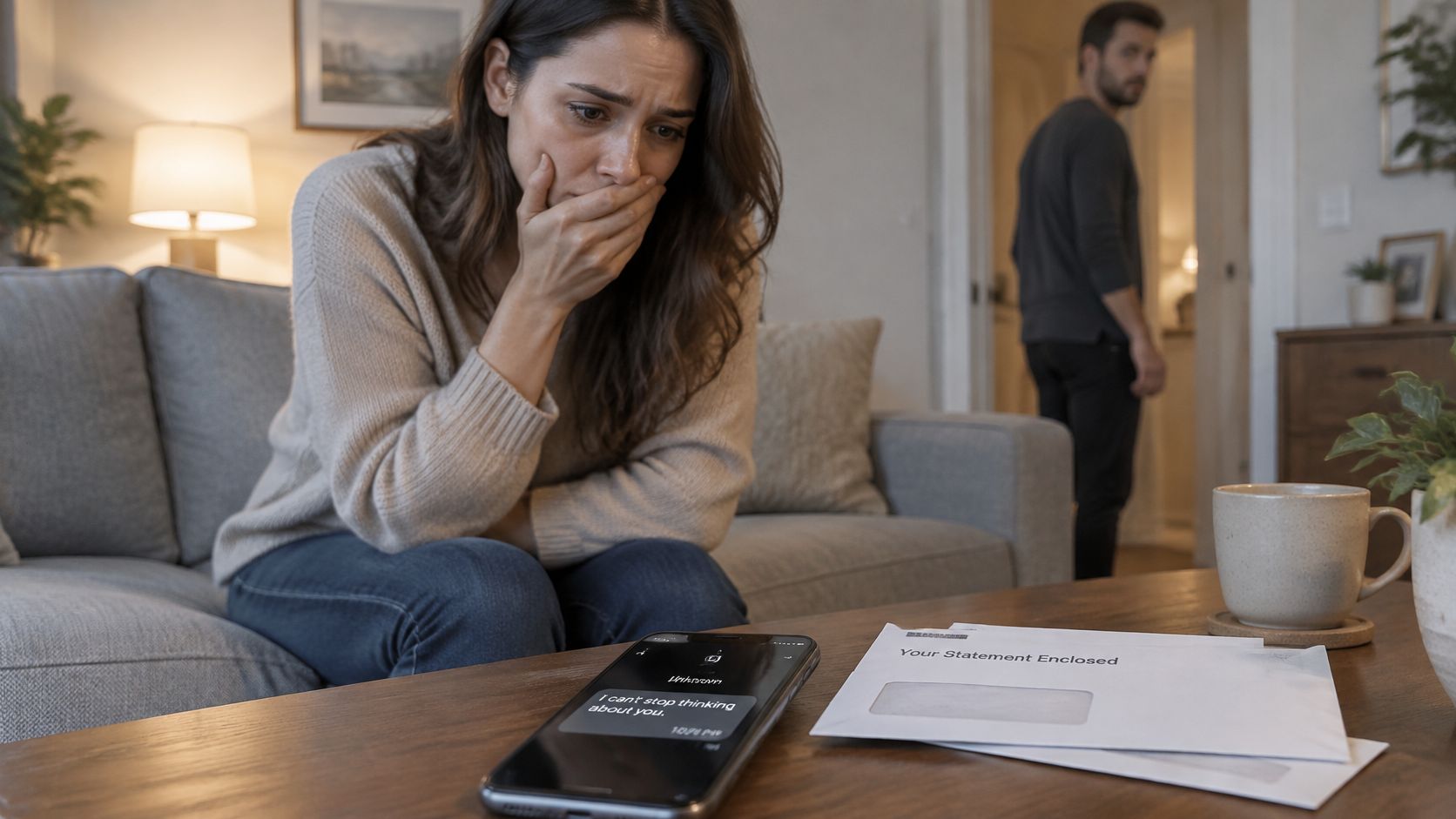
Signs Trust Has Been Broken
Infidelity is one cause, but secrecy about money, repeated broken promises, or hidden contact with someone else can also damage trust. Common signs include:
Checking phones or accounts repeatedly because answers do not feel credible.
Replaying conversations or asking the same questions without getting a clear response.
Feeling tense when a partner is late or turns a phone face down.
Hearing apologies while the behavior continues.
Feeling unable to raise concerns without being blamed or punished.
Research discussed by UC Berkeley's Greater Good Science Center puts infidelity in context, but no statistic can tell you what your relationship needs. If betrayal also affects shared finances or property, family law guidance on protecting your interests after marital betrayal addresses questions separate from relationship repair.
How to Rebuild Trust After a Betrayal
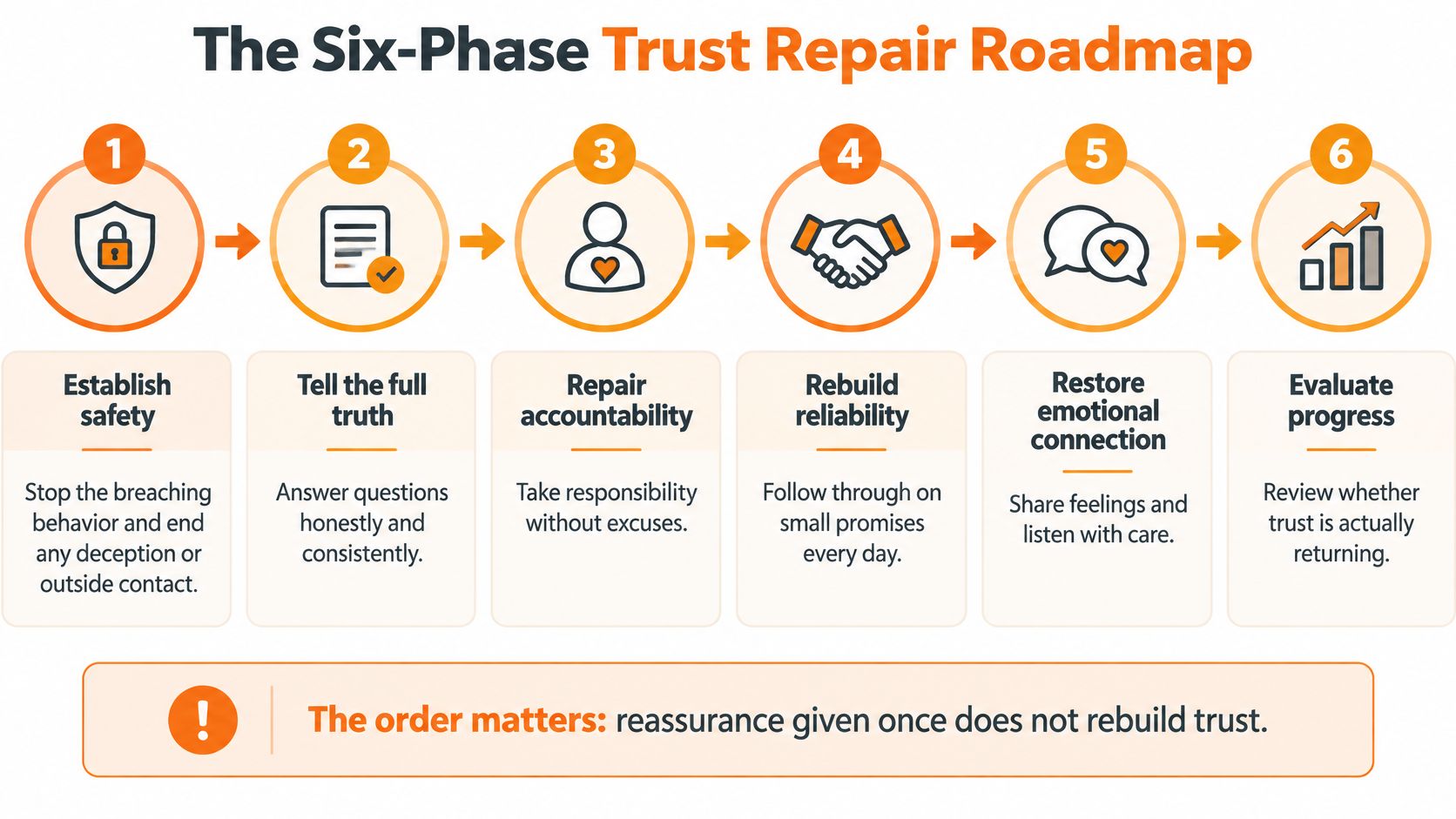
Trust returns through repeated, observable changes, not one apology. A review of trust-repair research in the Journal of Family Therapy identifies accountability, transparency, clear explanations, and shared activities as recurring elements. Start with these steps:
Stop the breach. End the behavior and any ongoing deception. Agree on what that means in practical terms.
Give a clear account. Explain what happened, when it began, and what has ended. Answer questions without minimizing or blaming the hurt partner.
Take responsibility. Name the harm, apologize, and follow through on specific changes. Later revelations can reopen the injury.
Agree on temporary transparency. Decide what information will be shared, for how long, and when to review the agreement.
Keep small commitments. Reliability grows when everyday promises are kept without reminders.
Make room to reconnect. Set aside time together that is not solely about the breach, while leaving space for hard conversations.
You can use everyday trust-building guidance alongside these steps. If every conversation turns into an argument, try setting a time to talk and borrowing from these communication techniques for reconnecting.
Set Boundaries Without Turning to Surveillance
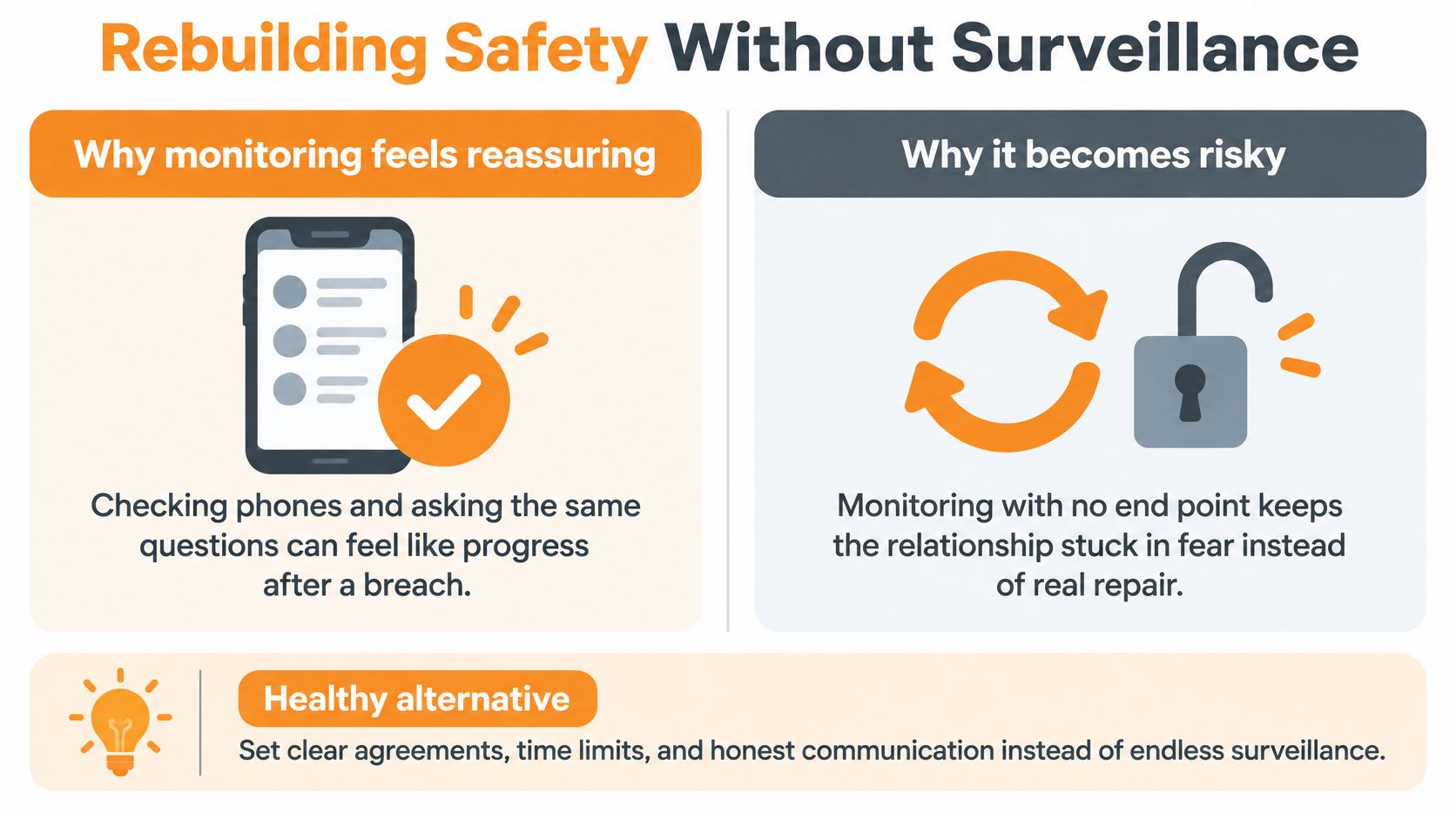
Checking a phone may offer brief relief, but constant monitoring can keep both partners on alert. A systematic review of trust repair after betrayal found limited research on repair practices. It does not establish indefinite monitoring as a solution.
A useful transparency agreement is voluntary, specific, and time-limited. Write down what will be shared and set a date to revisit it. Look for less checking over time, not more. Threats, isolation, or treating all privacy as proof of guilt are warning signs, not repair strategies.
For parents, the way you discuss privacy and accountability can also shape what teens learn about relationships. If repeated checking is tied to anxiety, this guide to anxious attachment may offer context. If conflict keeps escalating, read more about conflict resolution therapy or explore family counseling in Katy when the strain affects the wider family.
Can a Relationship Recover From Broken Trust?
Sometimes, but recovery is not an obligation to stay. In The Knot's Relationship & Intimacy Study, many respondents identified lack of trust or honesty as a deal breaker. A five-year follow-up of couples after infidelity found that some couples who remained together later reported satisfaction comparable to couples without infidelity; its infidelity group was small, so the findings cannot predict your outcome.
Ask yourself: Has the behavior stopped? Does your partner answer questions directly and accept consequences? Are conversations becoming safer? Are changes visible without constant reminders? You can work toward clarity while keeping the choice to leave open.
When to Consider Couples Counseling in Katy, TX
Consider support if the same argument repeats, deception continues, or fear and sleeplessness are affecting daily life. Couples therapy in Katy can help structure difficult conversations. Marriage counseling for a struggling relationship offers more on seeking help. If one partner needs space to process what happened, individual counseling may be a better first step.
If there is intimidation, coercive control, or abuse, prioritize individual safety-focused support rather than joint sessions.

Katy Teen & Family Counseling serves couples and families in Katy and the greater Houston area. To prepare for a first conversation, write down one question you need answered, one boundary you need respected, and one change you need to see.
Ready to talk about what comes next? If broken trust has left you and your partner stuck in the same painful conversation, reach out to Katy Teen & Family Counseling to ask about counseling options in Katy, TX. Visit the Contact Us page, call or text 281-519-6364, or email info@katyteenandfamilycounseling.com. You can ask questions before deciding whether to schedule.
About the Author

Jason Drake, LCSW, BCN-L is the owner and lead clinician of Katy Teen & Family Counseling in Katy, Texas. Since 2003, he has worked with teens, young adults, and families facing relationship challenges alongside concerns such as anxiety and trauma. He is board certified in neurofeedback as an Associate Fellow through BCIA, trained in EMDR, and a Certified Brain Health Professional through the Amen Clinics. Jason writes about mental health and supports therapy teams and teen residential treatment centers. Read more of his teen mental health articles.


Comments