
Afraid of Confrontation? Counseling in Katy, TX Can Help You


Your phone lights up with a question you do not want to answer. You type a reply, delete it, and tell yourself you will respond later. If you are afraid of confrontation, even a small disagreement can feel bigger than it looks from the outside.
Speaking up does not mean pushing through every difficult conversation. It means learning when to pause, when to say what you need, and when to ask for help.
Why does confrontation feel so hard?
Sometimes anxiety peaks before the conversation starts. A study of people with social phobia found that anxiety rose sharply before a feared social interaction. That does not mean everyone who dreads disagreement has a disorder, but it helps explain why “just say it” is rarely useful advice.
You might want to clear the air and avoid a painful reaction at the same time. Psychologists call this an approach-avoidance conflict. Research on approach-avoidance decisions describes that tension, although it did not specifically examine interpersonal confrontation. A review of anxiety and avoidance also distinguishes fear of an immediate threat from anxiety about what could happen next.
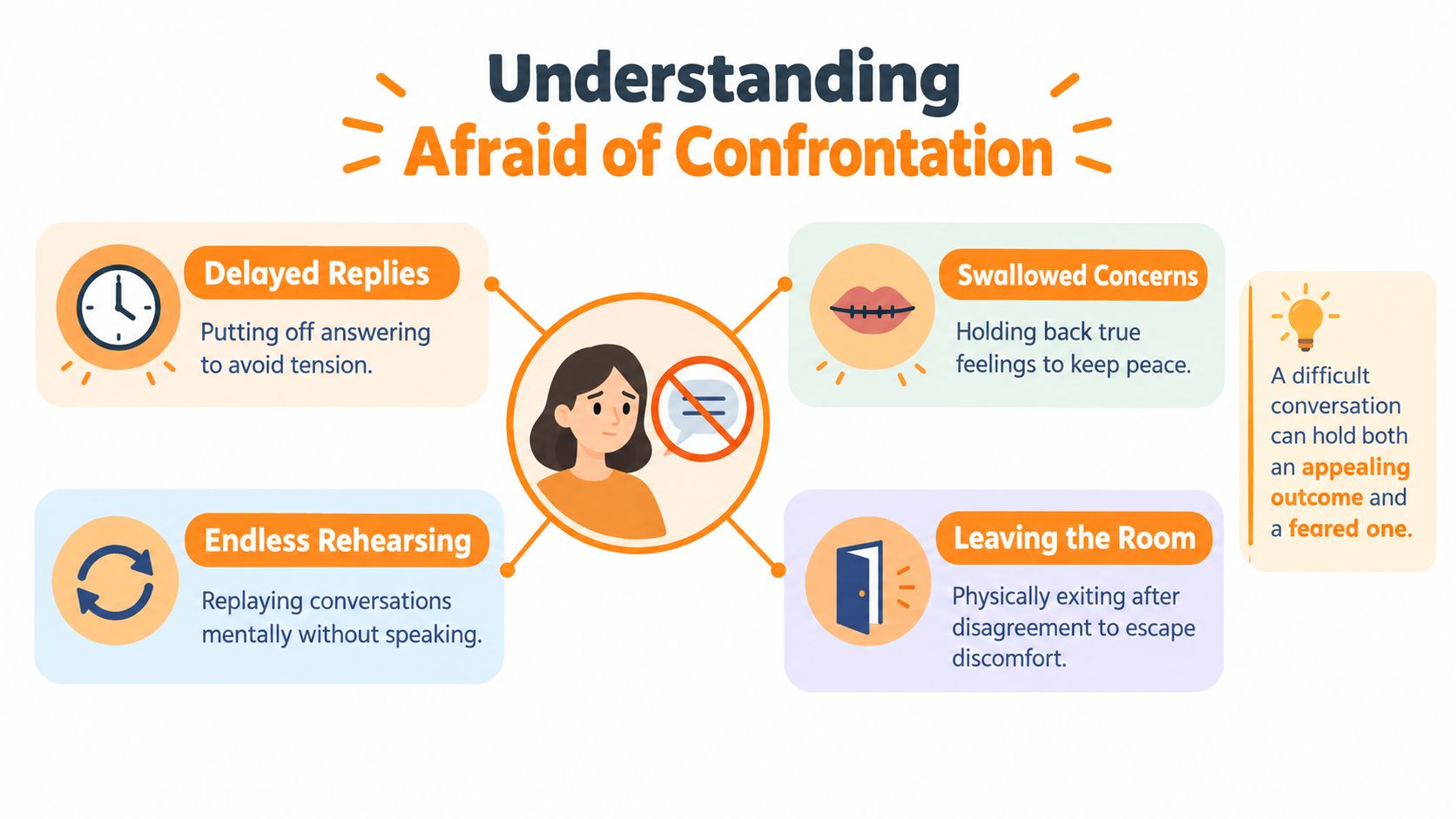
For teens, silence does not always mean there is nothing to say. Research on parent-adolescent conversations describes how some teens postpone a talk or give short answers while managing independence and connection. “Nothing” may mean “not right now.”
Is taking a break helpful, or is it avoidance?
A break can help you return to a conversation more calmly. Avoidance is different: the issue keeps affecting you, but the conversation never happens. Research on social approach and avoidance shows that anxiety can influence how people approach others, though it cannot tell you what any one delayed reply means.
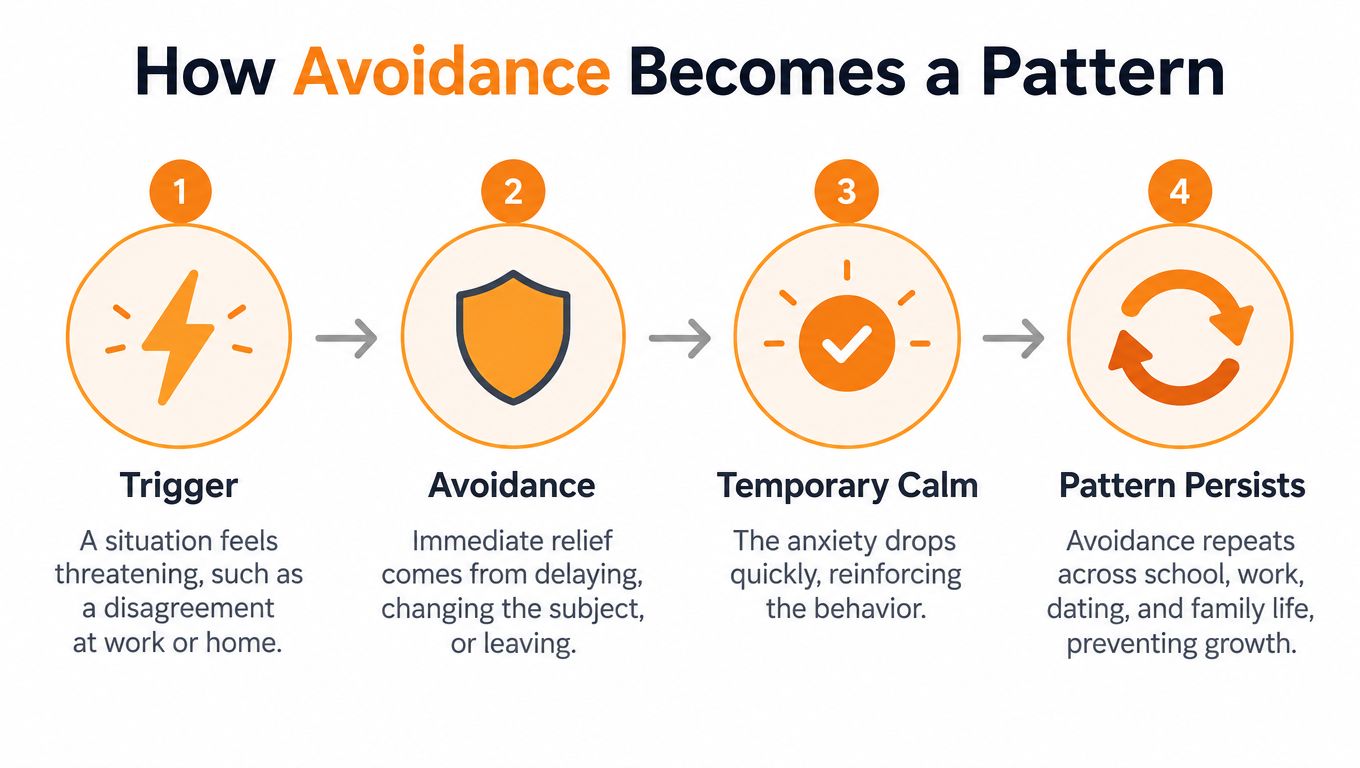
Ask yourself: Am I pausing so I can come back to this, or hoping it goes away?
There is an important exception. If speaking up could bring threats, coercion, bullying, or retaliation, do not treat the situation as a confidence exercise. Make a safer plan with a trusted adult, clinician, school contact, or workplace support person. Seek emergency assistance if someone is in immediate danger.
How can you speak up without starting a fight?
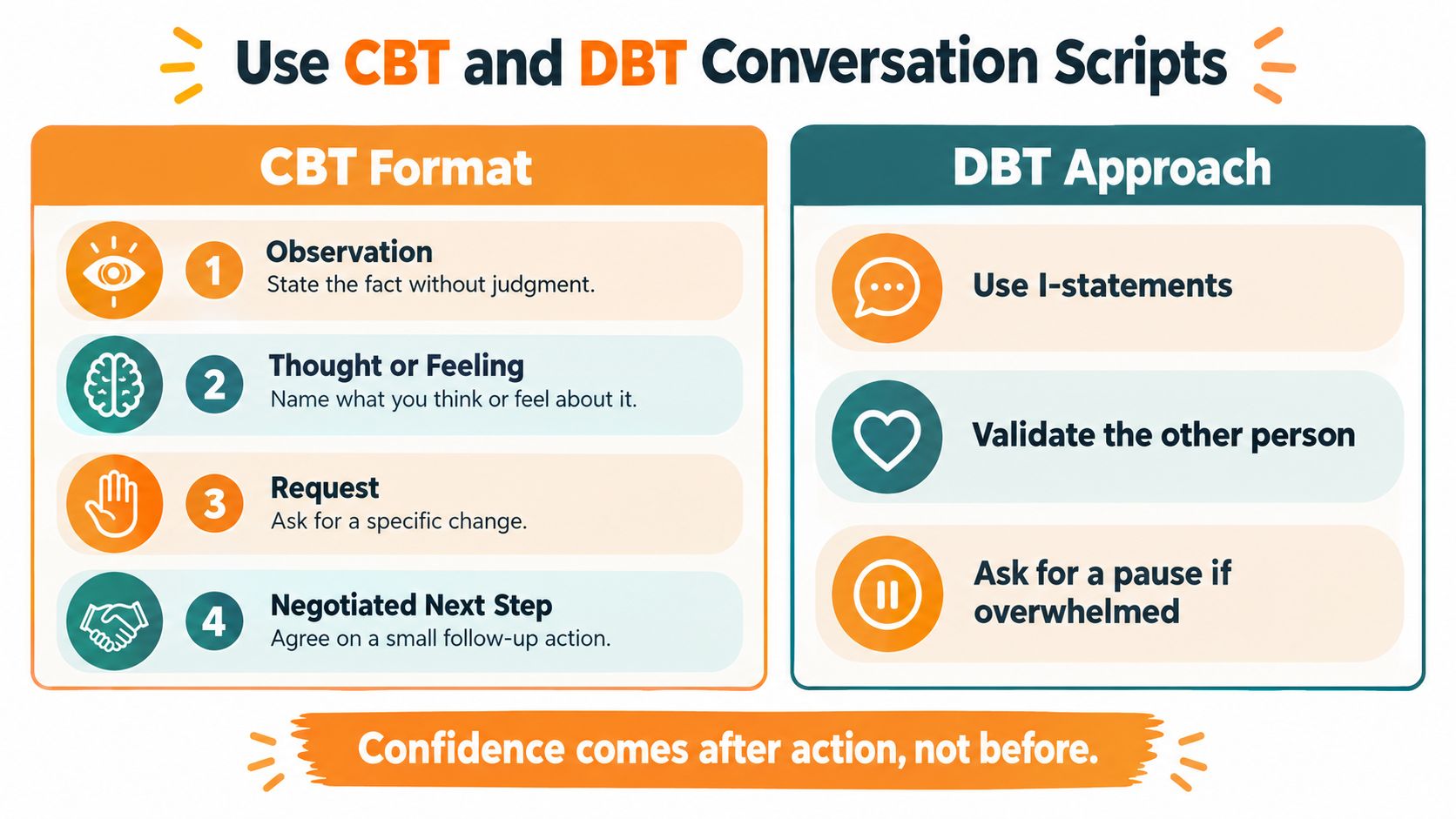
Try three steps: name what happened, say how it affected you, and ask for a specific change.
“When our plans changed at the last minute, I felt frustrated. Could you let me know earlier next time?”
If you need a break, give the other person a return point:
“I want to talk about this, but I am too upset right now. Can we come back to it after dinner?”
You can recognize another viewpoint without surrendering your own: “I understand why you see it differently. My answer is still no.” The practice's guides to creating healthy personal boundaries and shifting from complaint to request offer more ways to prepare.
CBT-informed practice can help you compare what you feared with what happened. DBT-informed skills, including DEAR MAN, can help you make and hold a clear request. An assertiveness-training trial found improvements in assertive behavior and emotional distress compared with controls. No script, however, can make an unsafe relationship safe.
Start with a conversation that feels manageable
Do not make your first practice attempt your hardest family conflict. Try stating a preference or requesting a small change with someone who usually responds safely. A meta-analysis of psychological treatments found benefits over waitlists, including behavioral gains, but group findings cannot predict how your next conversation will go.
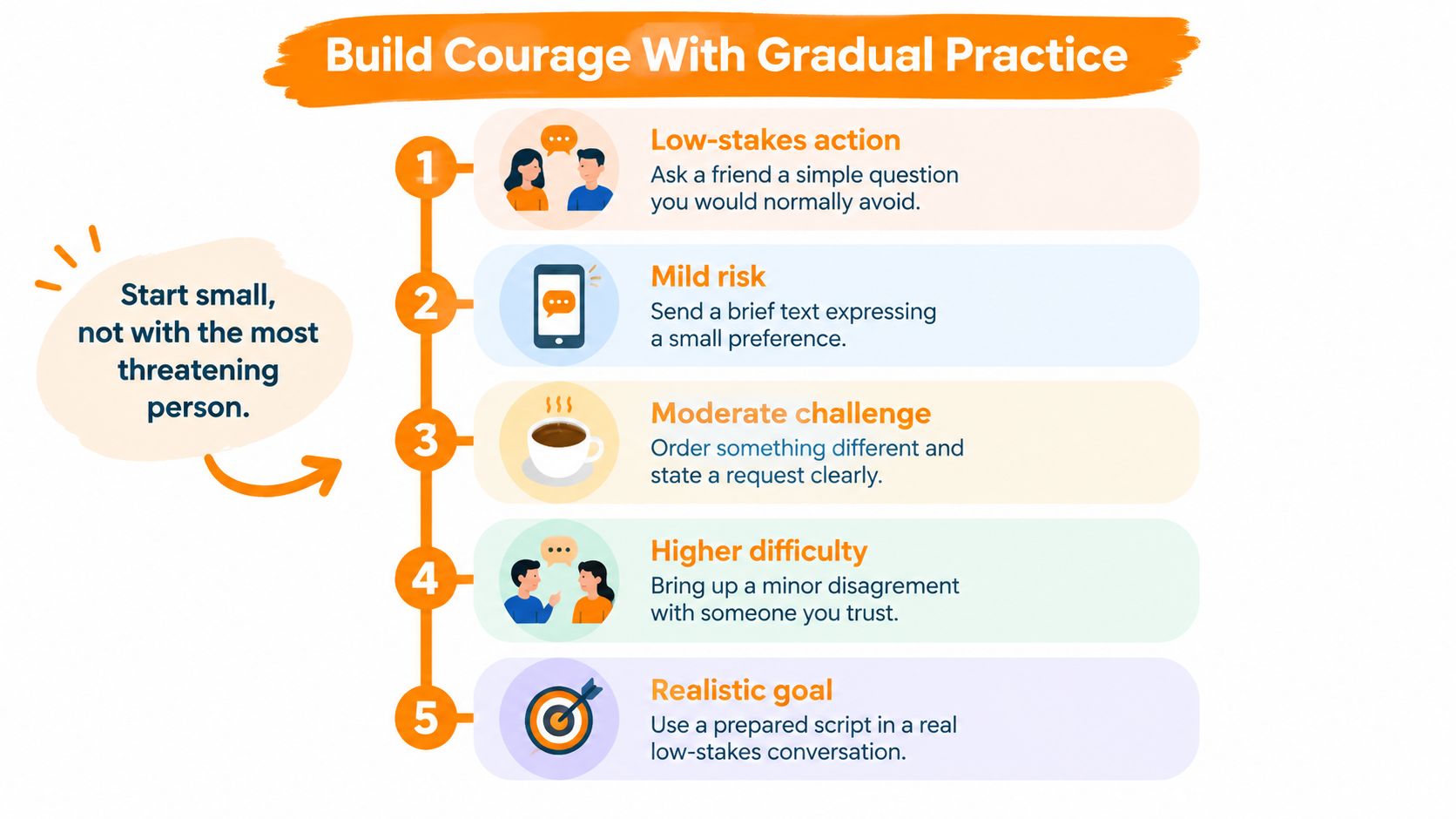
Afterward, write down what you expected, what you said, and what happened. Include the mixed parts. Someone can sound disappointed and still respect your request.
Where can you get help with fear of confrontation in Katy, TX?
If fear of confrontation is affecting school, work, friendships, or family life, counseling can help you understand both the anxiety and the relationship dynamics behind it. A review of cognitive factors in social anxiety explains why threat predictions and rumination matter alongside learning what to say.
Katy Teen & Family Counseling works with teens, young adults, and families in Katy, Texas, and the greater Houston area. Teen counseling in Katy, TX can give teens space to practice speaking up without forcing a conversation at home. If anxiety is a major part of the struggle, explore the practice's teen anxiety therapy in Katy. Families navigating recurring disagreements can read its guide to conflict resolution therapy. Joint sessions may not be the safest starting point when coercion is involved.
The practice's Katy office is at 23410 Grand Reserve Drive, Suites 401, Katy, TX 77494, near I-10 and Texas 99. You can ask about privacy, safety planning, and how progress in everyday conversations is assessed. The practice's counseling approaches include talk therapy and other options. Neurofeedback may be discussed as an adjunct, not a substitute for communication practice or safety planning.
One small next step
Write one sentence you could use to begin a safe, low-stakes conversation. If today is not the right time, choose when you will return to it.

For a workplace perspective, see Acheloa Wellness, Inc.’s Speaking Up at Work. The video below offers another way to think about speaking up.
Progress might be a clear request, returning after a pause, or getting support when you need it.
About the Author

Jason Drake, LCSW, BCN-L, is the owner and lead clinician of Katy Teen & Family Counseling and Katy Counseling for Men. Since 2003, he has worked with teens, young adults, and families facing anxiety, depression, trauma, panic, school stress, bullying, and relationship difficulties.
Jason is board certified in neurofeedback as an Associate Fellow through BCIA, trained in EMDR, and a Certified Brain Health Professional through the Amen Clinics. He also supports therapy teams and teen residential treatment centers and writes about mental health. Find more of his work on the practice's articles page. His media appearances include Fox 26 Houston and the podcasts Grow a Group Practice, Let's Talk With Jennifer B, and Marketing Matters.


Comments