
Triggers in Mental Health: What They Are and How to Cope


Your teenager comes home from school, drops their backpack, and suddenly can't tolerate the sound of a cupboard closing. A parent asks a harmless question, but the teen snaps, shuts down, or rushes to their room. Later, everyone is left wondering what happened. The moment looked ordinary, yet the reaction was anything but.
Families often carry the same two questions: What just happened, and what can we do about it? Understanding triggers in mental health can help parents and teens recognize the difference between a protective alarm response and everyday frustration, identify patterns, and prepare for difficult moments without blame. Triggers can respond well to preparation and evidence-based support. For families looking for help with teen anxiety, trauma, panic, or school stress, Katy Teen & Family Counseling offers support for teens, young adults, and parents in Katy, TX and the greater Houston area.
Table of Contents
Common Types of Triggers in Teens and Young Adults - Sensory cues that bring the past into the present - Interpersonal cues that signal rejection or danger - Environmental and internal cues
Preparing for and Responding to Triggers - Preparation begins with pattern recognition - The in-the-moment plan should be short
When an Ordinary Moment Sets Off a Big Reaction
A sixteen-year-old hears a particular tone in her father's voice and stops speaking. He hasn't threatened her. He's asking whether homework is finished, but the sharpness of his voice resembles earlier experiences that made her feel unsafe. Her body reacts before she can explain the connection. Her heart races, her shoulders tighten, and she either argues or goes completely quiet.
Another teenager walks into a crowded school hallway and suddenly feels trapped. The noise, bodies, and lack of personal space bring on panic. A third smells a cleaning product at a friend's house and becomes tearful without understanding why. The smell may be linked to a difficult memory, even if the memory isn't immediately available as a clear story.
These reactions aren't proof of a bad kid, and they don't automatically mean a parent has done something wrong. A trigger is often a learned alarm response, and the person experiencing it may feel confused by its force. The first helpful response is curiosity rather than punishment: What did the body notice, and what did it believe was about to happen?
Parents who want a practical explanation of panic symptoms can also use this CBT for panic attacks guide as a starting point for understanding how thoughts, body sensations, and behavior can reinforce one another. Families in Katy looking for direct support can also explore teen counseling services through Katy Teen & Family Counseling.
The path forward is manageable. Families can learn the difference between a cue and a diagnosis, spot sensory and social patterns, build a response plan, and recognize when professional care is appropriate.
Understanding What a Mental Health Trigger Really Is
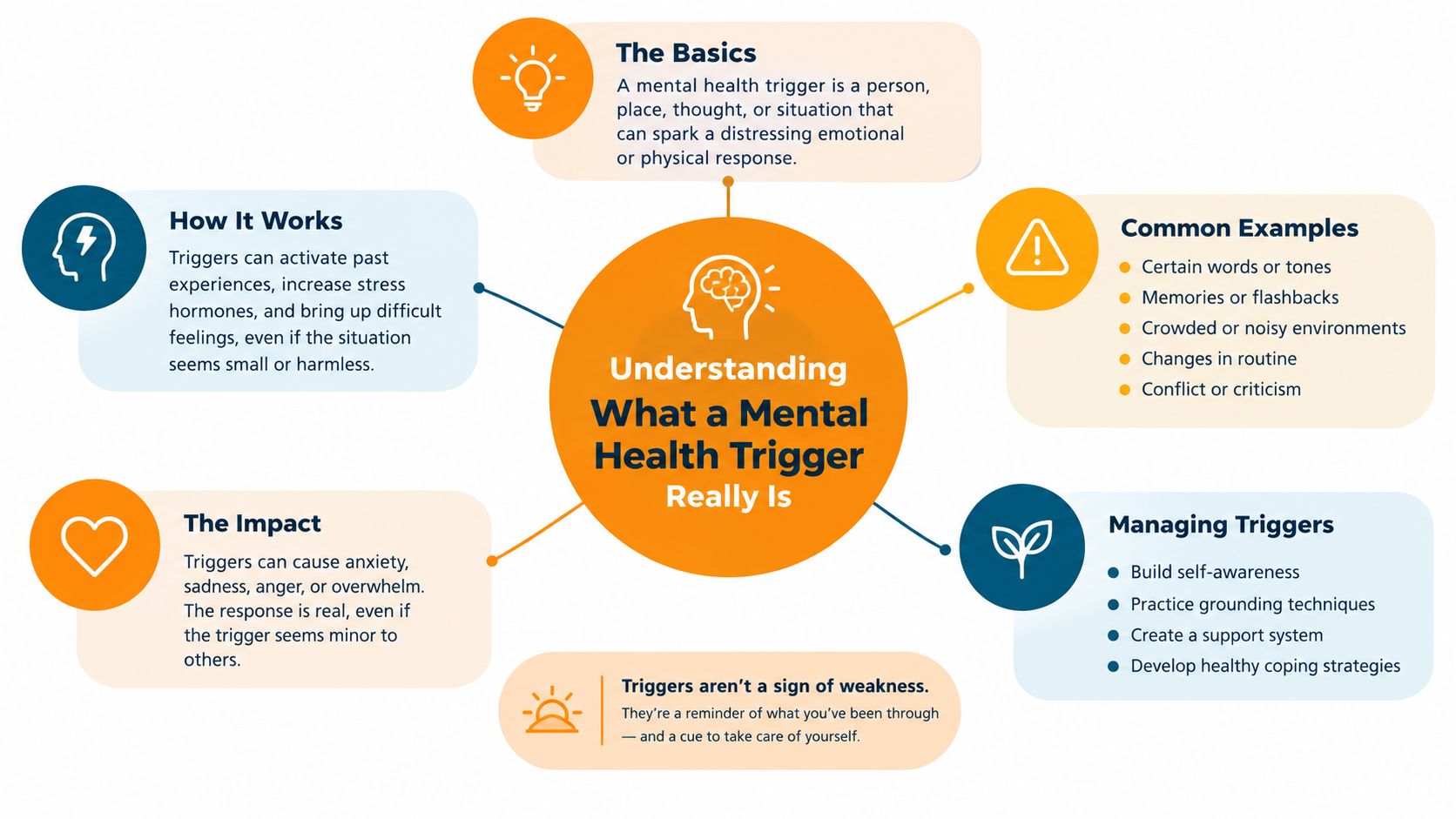
Think of the brain as a smoke detector. Its job is to notice danger quickly, not to investigate every signal patiently. After frightening, humiliating, or overwhelming experiences, the detector may become highly sensitive. It can sound an alarm at burnt toast, not only at a house fire.
A mental health trigger is a cue that activates a stress response. The cue may come from outside the person, such as a smell, sound, place, crowd, message, or person. It may also come from inside, including a thought, body sensation, memory, image, or fear about what might happen next.
The sequence often happens faster than conscious reasoning. A teen hears yelling, feels heat in their face, and moves toward panic before thinking, "This situation is different from the past." That speed doesn't make the reaction fake or dramatic. It reflects a protective system trying to prevent danger.
A trigger is a cue that tells the brain and body, often before conscious awareness, to prepare for possible threat.
Triggers are learned protective responses, not signs of weakness. They can develop after trauma, repeated criticism, bullying, family conflict, loss, or other adversity. The same cue may affect one person strongly and barely register for another because personal history shapes the brain's alarm settings.
Naming the cue matters because families can't prepare for a pattern they can't see. A simple observation such as "panic often starts after late-night messages from that group chat" gives everyone more useful information than "you overreact online."
Telling a True Trigger Apart From Everyday Stress
The word trigger is used casually online to describe annoyance, disagreement, embarrassment, or offense. That loose use can blur an important distinction. Feeling uncomfortable deserves respect, but not every uncomfortable experience is a trauma trigger, and ordinary stress shouldn't automatically be treated as a disorder.
Look for the pattern around the reaction. A trauma-related trigger often arrives rapidly and feels much bigger than the present situation appears to warrant. The body may respond with panic, shaking, nausea, numbness, intense anger, freezing, or a sense of being far away from the moment. The person may avoid a place, conversation, smell, or activity afterward, or experience ongoing sleep disruption.
Everyday stress usually has a clearer connection to the current problem. A teen may be tense before an exam, frustrated after an argument, or upset by criticism, yet still remain connected to what's happening and gradually settle after rest, reassurance, problem-solving, or repair. A strong emotional reaction can be intense without being trauma-based.
Dimension | Everyday Stress | Strong Emotional Reaction | Trauma Trigger |
|---|---|---|---|
Intensity | Fits the current pressure | Feels larger than the event | May feel sudden, overwhelming, or disconnected from the present |
Body response | Tension, worry, faster heartbeat | Anger, tears, panic, or shutdown | Alarm, freezing, hypervigilance, intrusive memories, or dissociation |
Duration | Eases as the problem changes | May last through the conflict | Can linger through avoidance, disturbed sleep, or repeated reminders |
What helps | Rest, support, and practical solutions | Validation, space, and emotional repair | Grounding, safety planning, and possibly trauma-informed therapy |
This comparison isn't a diagnostic test. A teen doesn't need a perfect label before receiving compassion. Parents can say, "That reaction looks painful. Let's understand it," while avoiding assumptions that every upset feeling requires clinical treatment.
Normal stress still deserves care. The aim isn't to minimize discomfort. It's to use accurate language so families respond to the actual need instead of arguing over whether someone is really triggered.
Common Types of Triggers in Teens and Young Adults
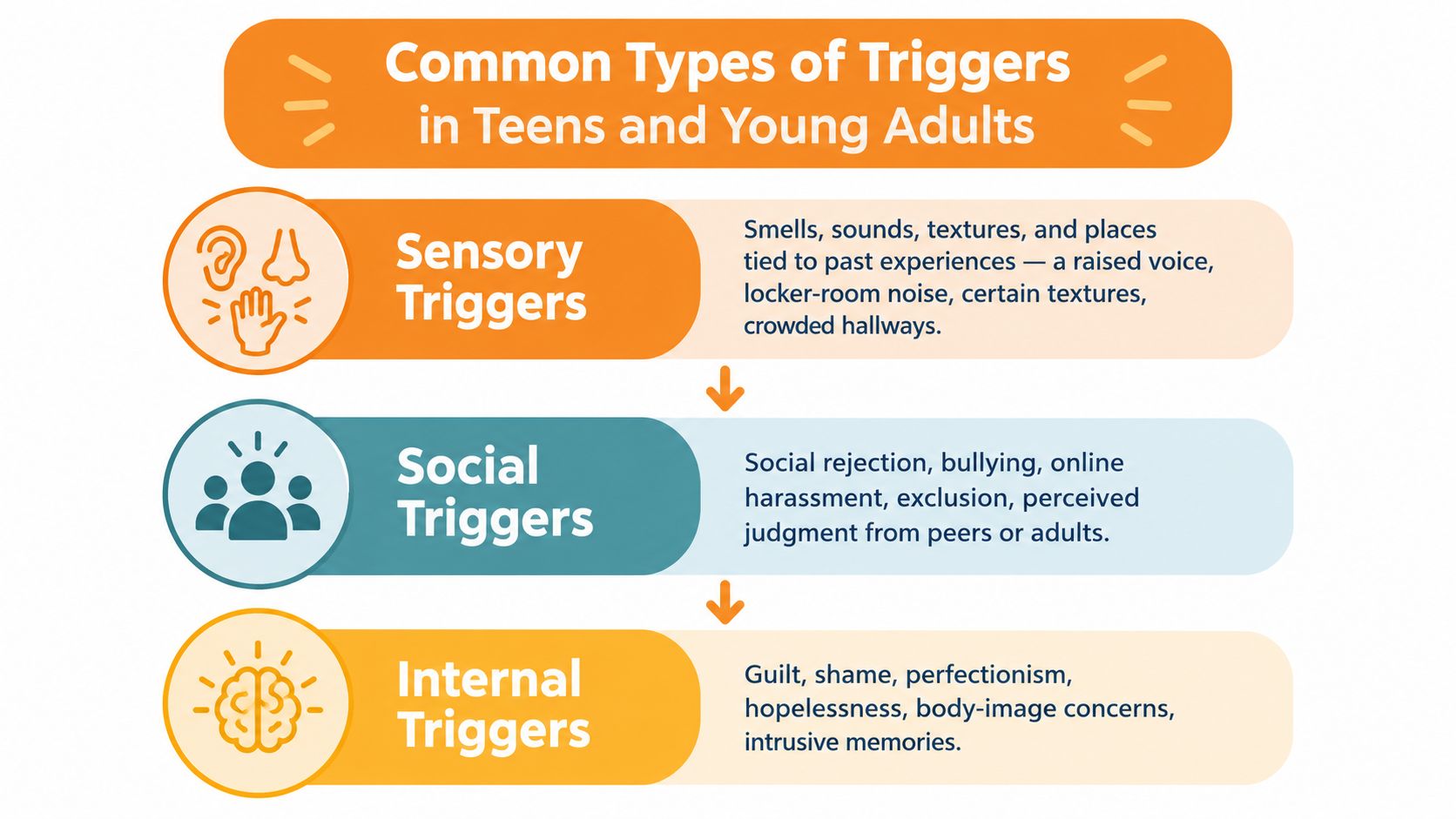
Triggers often fall into overlapping groups. A single school day may include sensory cues, social tension, and internal fears, all reinforcing one another.
Sensory cues that bring the past into the present
A particular smell can change a teen's mood before they know why. Laundry detergent, cigarette smoke, hospital disinfectant, or a food smell may connect to a frightening period. A song playing in a car may bring back a breakup, an assault, or a humiliating event.
Sound can work the same way. A raised voice, locker-room shouting, slammed doors, or sudden footsteps may make a teen scan for danger. A crowded hallway can create a trapped feeling, especially for someone who has experienced bullying or public humiliation there.
The important clue is often the mismatch between the cue and the response. The sound may be objectively safe, but the body remembers it differently.
Interpersonal cues that signal rejection or danger
A parent's criticism may activate shame when a teen has a history of harsh judgment. A friend leaving a message unanswered may feel like abandonment rather than a delay. Being told "we need to talk" can cause panic if similar words previously preceded punishment or frightening conflict.
Bullying and peer pressure can make social settings feel unsafe. A teenager who was mocked in a group chat may freeze when classmates laugh nearby, even when the laughter has nothing to do with them. Another may become defensive after a teacher corrects an assignment because correction feels like public rejection. Families dealing with bullying-related anxiety or social withdrawal may benefit from teen therapy in Katy, TX that addresses both emotional triggers and coping skills.
Environmental and internal cues
School performance pressure, family transitions, crowded spaces, a move, or divorce can create recurring activation. A student may feel sick every Sunday evening because the body anticipates the school week. A family change can leave a young person scanning for further losses.
Internal triggers can be just as powerful. Guilt, shame, perfectionism, hopelessness, body-image concerns, or an intrusive memory may start the alarm without any visible external event. For parents, noticing patterns can be more useful than trying to find one dramatic cause. A simple journal can help a family identify your productivity blockers, while keeping the focus on observation rather than self-blame.
How Triggers Affect Mental Health Symptoms
A trigger can start a chain reaction. The brain detects a cue, the body shifts into alarm, and attention narrows toward protection. The teen may become hyperaroused, meaning unusually alert, irritable, restless, panicked, or ready to fight. Another teen may shut down, withdraw, or struggle to speak.
Trauma-related distress can also involve re-experiencing, such as intrusive thoughts or flashbacks. Avoidance may follow. A student skips the hallway where bullying occurred, stops attending activities, or avoids sleep because nightmares feel frightening. Sleep disturbance then leaves the body more vulnerable to the next stressor.
Repeated activation can gradually shrink a young person's world. One avoided class becomes several. One unanswered message becomes withdrawal from friends. Parents may see defiance, laziness, or isolation when the teen is actually trying to prevent another alarm.
The wider context matters. The World Health Organization's adolescent mental health information states that 1 in 7 adolescents ages 10 to 19 experiences a mental disorder globally and identifies adversity, peer pressure, identity exploration, harsh parenting, violence, bullying, and severe socioeconomic problems among contributors to adolescent stress. These are common environments, not rare edge cases.
Independent burden-of-disease research estimated 1.17 billion prevalent cases of mental disorders worldwide in 2023, with anxiety and depressive disorders among the most common conditions. The point for parents isn't to predict a diagnosis from one reaction. It's to understand that symptoms can follow recognizable pathways, and predictable pathways can be treated. Families seeking therapy for trauma, anxiety, or panic symptoms can learn more about counseling for teens and young adults in Katy.
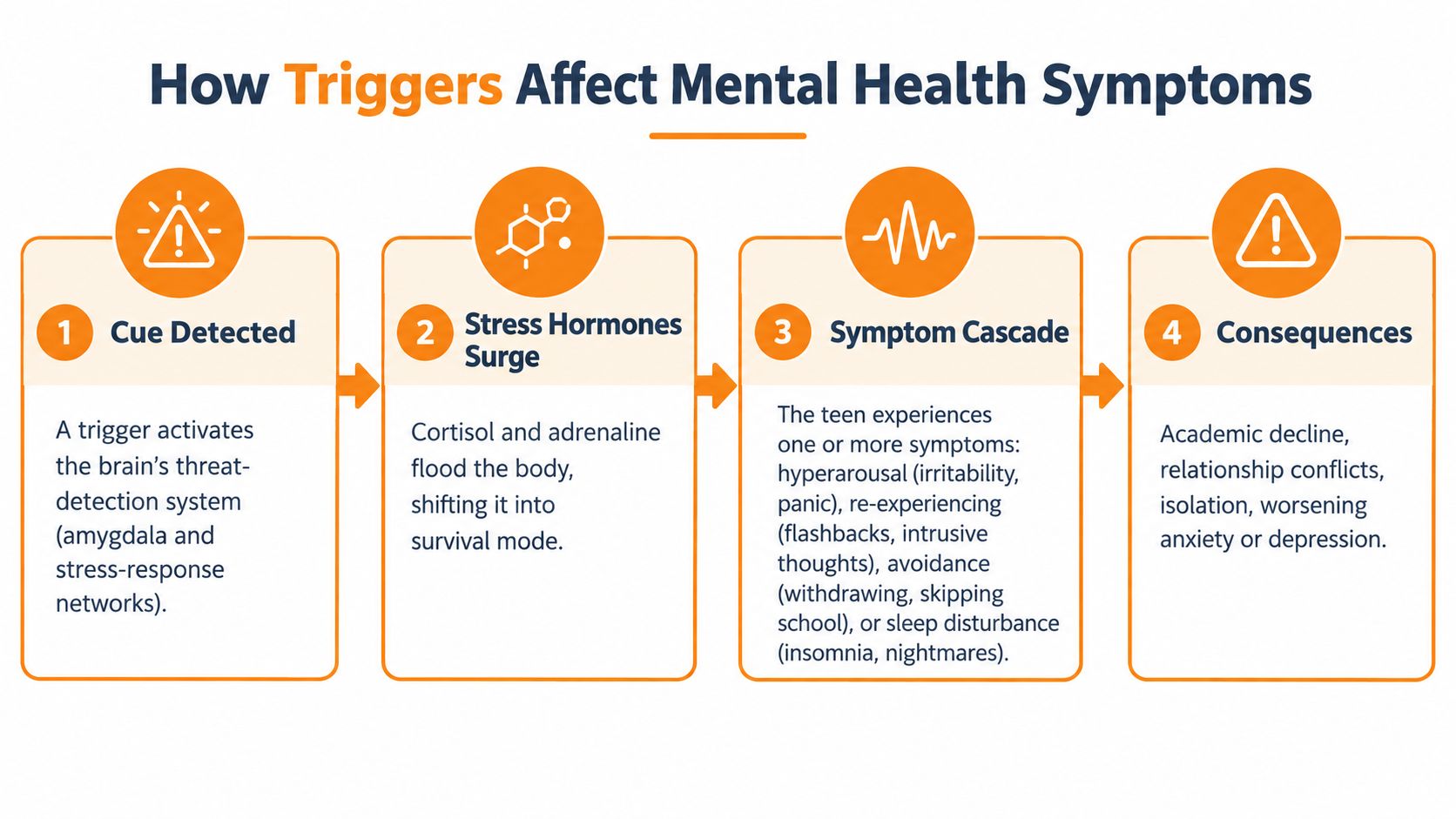
A short visual explanation of this body response can help a teen feel less ashamed and more willing to practice coping skills.
Modern Triggers Families Often Miss
Traditional trauma cues are easy to picture: a smell, a sound, a place, or a person connected with harm. Digital life adds less visible triggers. A teen may seem fine before opening an app, then become tense, withdrawn, ashamed, or irritable after scrolling through carefully edited images and status updates.
Social comparison can turn an ordinary feed into a constant ranking system. Algorithmic feeds may keep presenting emotionally engaging content, while curated images can make a young person compare their appearance, friendships, achievements, or lifestyle with an unrealistic standard. Notification overload keeps the brain waiting for the next demand, reaction, or exclusion.
Cyberbullying and social exclusion can also follow a teen home. There's no clear boundary between school and recovery when a humiliating post, group-chat omission, or hostile message arrives in the bedroom. Loneliness and isolation may deepen even while the phone remains active.
A 2025 Child Mind Institute report found that 8 in 10 parents and youth ranked loneliness and social isolation among their top three youth mental-health concerns, while 60% of young people placed AI and social media among their top three concerns. That difference can change the conversation. Parents may focus on online safety or screen time, while young people may be trying to explain comparison, exclusion, or emotional pressure.
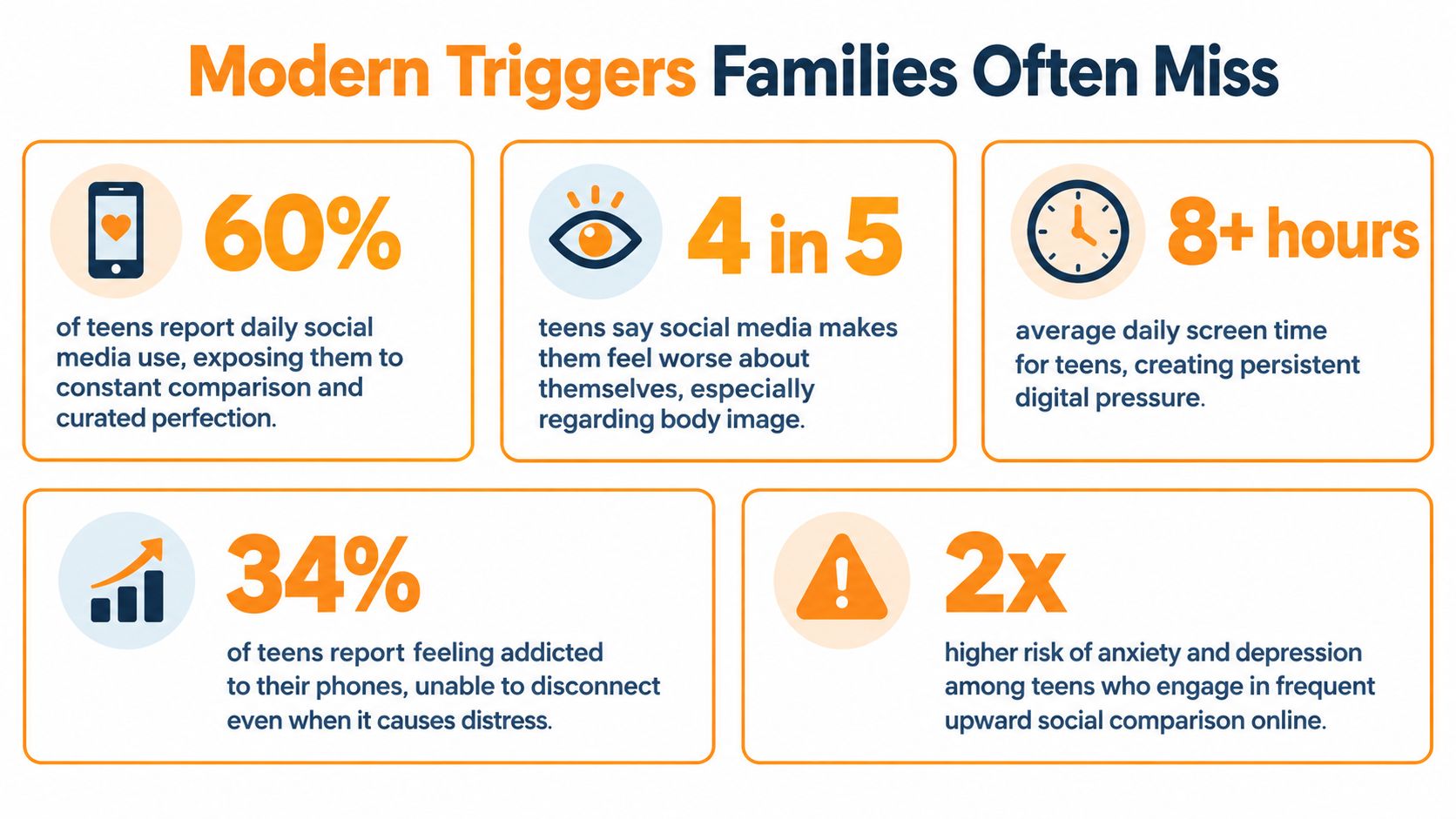
Watch for patterns rather than assuming the phone is always the cause. Does mood change after a specific app? Does the teen withdraw after checking a group chat? Do notifications interrupt sleep or homework? Families can discuss these observations without confiscating devices as the first move. Guidance on social media's impact on teenagers' mental health can support a more specific conversation.
Preparing for and Responding to Triggers
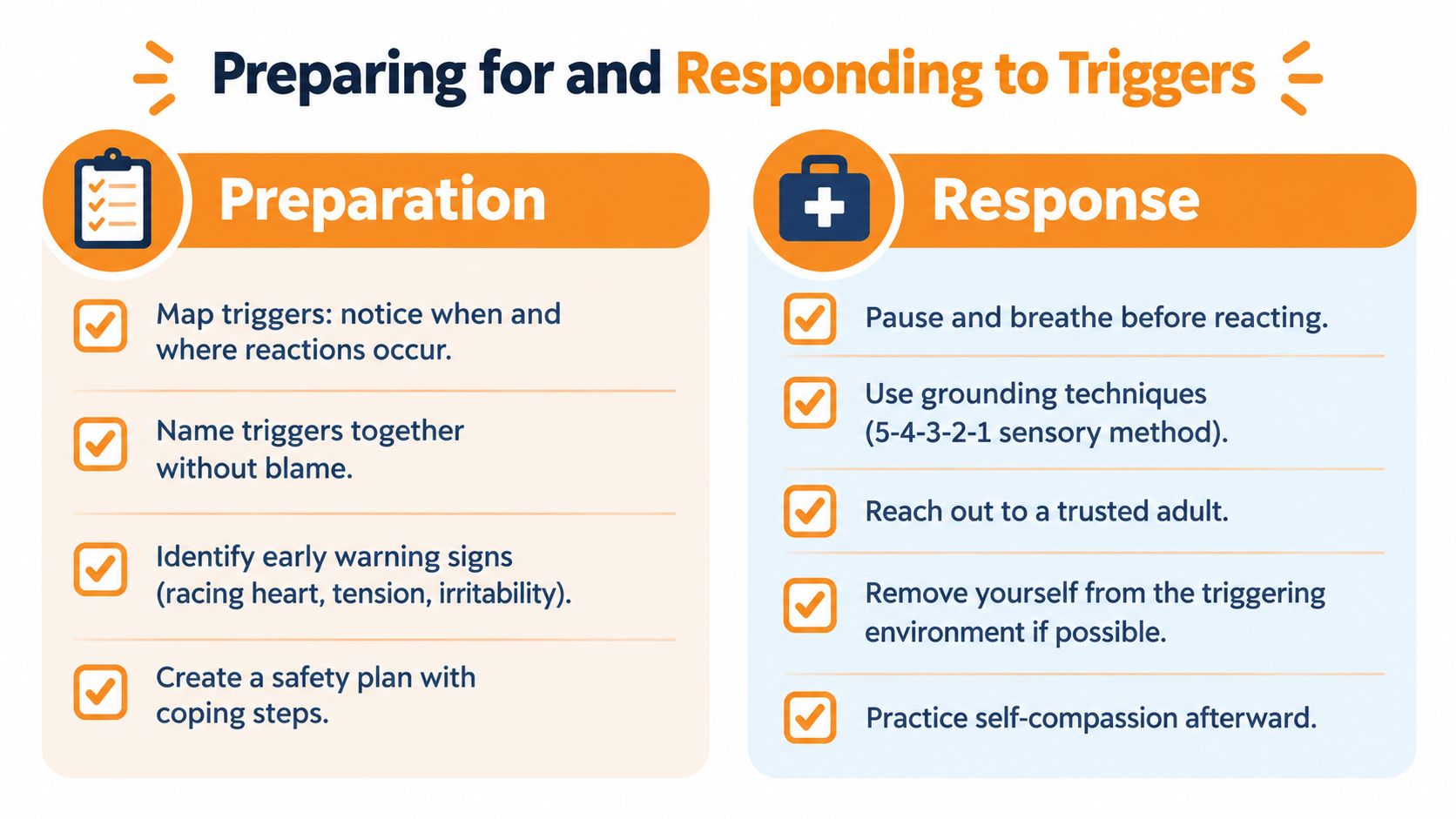
Families handle triggers more effectively when they prepare during calm periods. The plan doesn't need to be elaborate. It needs to be specific enough that a distressed teen can use it without explaining everything in the moment.
Preparation begins with pattern recognition
Start with a simple trigger map:
Notice the setting: Record when and where the reaction begins, such as Sunday night, a crowded hallway, bedtime scrolling, or a particular family conversation.
Name the cue: Ask whether the first signal was a sound, thought, message, body sensation, memory, or interaction.
Track early warnings: Look for racing heart, muscle tension, irritability, fast speech, silence, or an urge to leave.
Choose a first response: Decide whether the teen needs breathing, grounding, quiet, a trusted adult, or a change of environment.
Use neutral language. "I noticed your breathing changed when the group chat started" is more useful than "You always lose control over nothing." Ask the teen what support feels helpful and what makes the situation worse.
The in-the-moment plan should be short
When the alarm is active, lectures rarely help. Parents can validate first, then problem-solve.
Practical rule: Regulate the moment before discussing responsibility, consequences, or the original problem.
A teen might use the 5-4-3-2-1 grounding exercise by noticing five things they see, four they feel, three they hear, two they smell, and one they taste. Slow breathing can help lengthen the pause between alarm and action. An exit plan might mean stepping outside, sitting in a quieter office, or leaving a crowded event with an agreed-upon adult.
A family code word gives the teen privacy. One word or text emoji can mean, "I need help leaving," without requiring a public explanation. Afterward, self-compassion matters. Review what worked when everyone is calm, and consider practical resources on how to improve focus after work when stress has made concentration difficult. Families can also practice anxiety skills from this anxiety coping skill resource or reach out to Katy Teen & Family Counseling for professional support.
When to Seek Professional Support for Triggers
Self-help is useful, but it shouldn't carry the whole burden when symptoms keep intensifying. Seek professional support when avoidance is shrinking school, friendships, activities, or family life; sadness persists; sleep doesn't recover; or self-harm concerns appear. A sudden increase in panic, withdrawal, intrusive memories, or fear also deserves attention.
A clinician can match treatment to the pattern. CBT helps a teen examine links among thoughts, feelings, body sensations, and behavior. Trauma-focused approaches such as EMDR and ART help process distressing memories, while neurofeedback may be considered as part of care for regulation, focus, or sleep. The guide to coping with teen PTSD offers additional context for families considering trauma-informed support.
The World Health Organization reports adolescent anxiety disorders affecting an estimated 4.1% of 10 to 14-year-olds and 5.3% of 15 to 19-year-olds, while ACOG identifies bullying, abuse, academic and social demands, and stressful family environments as risk factors for adolescent anxiety. Triggers are understandable, manageable, and treatable. Early recognition gives families more choices. If your teen is struggling with anxiety, trauma responses, panic, or emotional overwhelm, Katy Teen & Family Counseling provides counseling for teens, young adults, and families in Katy, TX.
About the Author

Jason Drake, Licensed Clinical Social Worker and teen anxiety specialist. He provides therapy for teens Katy, TX and counseling for teens Katy, TX. He also provides counseling for young adults Katy, TX.
Drake is a Licensed Clinical Social Worker, Board Certified in Neurofeedback Associate Fellow, EMDR trained, and a Certified Brain Health Professional through the Amen Clinics. He has worked with teens, young adults, and families since 2003 and serves as Owner and Lead Clinician at Katy Teen & Family Counseling and Katy Counseling for Men.
He specializes in supporting high performing therapy teams focused on teen therapy, young adult counseling, and family counseling. Jason also provides expert coaching and technical assistance to teen residential treatment centers across the country and regularly contributes to mental health publications. You can explore more of his work on the Featured Articles page.
He has also appeared on Fox 26 Houston and podcasts including Grow a Group Practice, Let's Talk With Jennifer B, and Marketing Matters.
If you are ready to start counseling, contact us today.
Katy Teen & Family Counseling provides teen, young adult, and family counseling for anxiety, depression, trauma and PTSD, panic, school stress, bullying, and relationship concerns, along with in-house neurofeedback and approaches including CBT, EMDR, and ART. If triggers are affecting your family's daily life in the Katy or Houston area, visit Katy Teen & Family Counseling to learn about services and request support.


Comments