
8 Relationship Stages: A Practical Guide for Katy, TX Couples


A relationship can change without a dramatic turning point. One month you are excited about every message; later you are negotiating schedules, sharing bills, or wondering why the same argument keeps coming back. There is no universal relationship stages timeline. These eight stages are a way to recognize what is happening and choose a useful next step, not a schedule every couple must follow.
If you and your partner feel stuck, marriage counseling and couples therapy in Katy, TX can give you a place to work through the pattern together.
The 8 stages of a relationship
1. Attraction and first contact
You notice chemistry, shared humor, or an easy conversation. Whether you meet in person or online, first impressions tell you that you are interested, not that you are compatible. A Pew Research Center survey on online dating shows how meeting online became part of this early stage for many couples.
Try this: Ask about values as well as interests. Notice whether you leave an interaction feeling respected, not just excited.
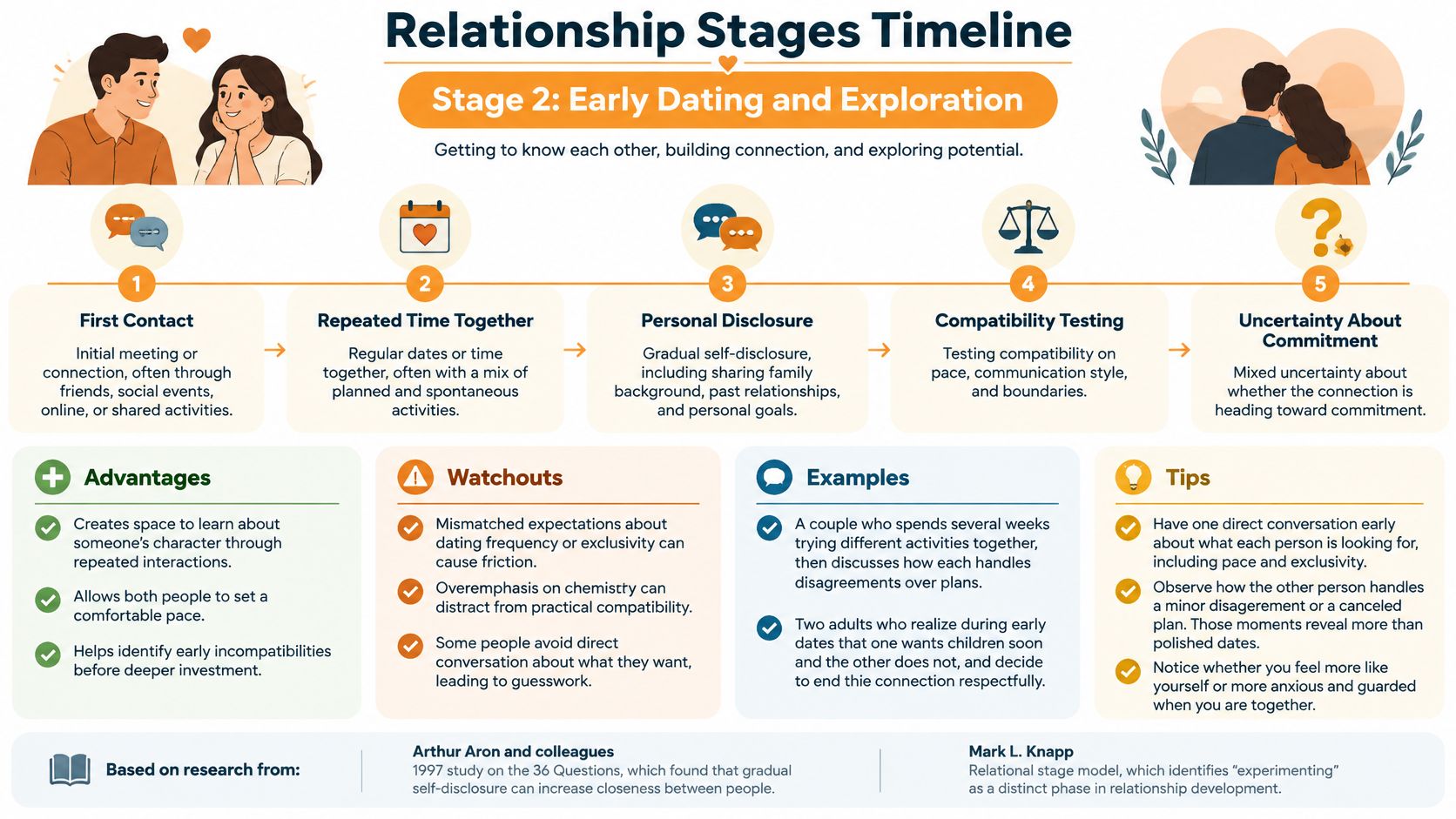
2. Early dating and exploration
You see each other in more settings and learn how each person handles plans, disappointment, and boundaries. A study of adolescent romantic relationship development describes how young relationships can grow more exclusive and emotionally close over time. That progression is not a deadline for any individual couple.
Try this: Share what you are looking for, and ask the other person what they want. A kind conversation about a mismatch is better than months of guessing.
3. Growing closer and defining the relationship
You share more of your daily life and may start talking about yourselves as a couple. Emotional closeness and readiness to commit do not always develop at the same pace.
Try this: Say what the relationship means to you now, ask how your partner sees it, and agree on when to check in again. This guide to navigating the different stages of a relationship offers more ways to approach transitions.

4. Exclusive commitment
You agree on what commitment looks like for your relationship. That might include exclusivity, future plans, or how much time you spend with each other's friends and family. One study of dating young adults found that average commitment changed with relationship duration, but its findings are not a timetable for individual decisions. A qualitative study of relationship development likewise describes commitment as a meaningful stage while recognizing different paths to it.
Try this: Talk about alone time, friendships, money, and how each of you asks for reassurance or space.
5. Integration and a shared life
Routines, households, and social circles begin to overlap. Moving in together can bring comfort and new questions about chores, finances, and independence. Survey results, including this UK survey of married couples on relationship timing, describe averages, not milestones you need to meet.
Try this: Keep a shared ritual and an individual interest. Set a regular household check-in so assumptions do not quietly become resentments.
6. Differentiation and conflict
Differences that were easy to overlook become harder to ignore. Conflict does not automatically mean the relationship is failing; repeated criticism, contempt, defensiveness, or withdrawal can, however, make it difficult to feel close. Broader partnership patterns also change over time, as this briefing on cohabitation illustrates. The meaning of moving in together is worth discussing rather than assuming.
Try this: Describe the problem without attacking your partner's character. If the conversation gets heated, agree on a break and a time to return. For more support, read about conflict resolution therapy for couples and families or these signs your relationship may be in trouble.
7. Repair and recommitment
After a hard stretch, rebuilding trust takes more than a good conversation. It takes a clear apology, a specific change, and follow-through. Findings from the Relationship Development Study also underscore the value of making intentional decisions about major relationship transitions rather than simply drifting into them.
Try this: Name what you did, how it affected your partner, and what you will do differently. If a betrayal is involved, read more about rebuilding broken trust.

8. Long-term partnership and maintenance
A lasting relationship still changes. Careers, parenting, health, and family needs can alter how connected you feel. Research on graphing relationship satisfaction over time describes shifts across long relationships, but population trends cannot predict yours.
Try this: Each of you sketch the highs and lows of your relationship, then compare notes. Ask what helped during a difficult period and what you need more of now.
When should you consider couples counseling in Katy, TX?
You do not have to wait for a crisis. If the same argument keeps returning, trust feels difficult to rebuild, or conversations have narrowed to logistics, couples therapy and marriage counseling may help you work on communication and connection. If a teen's relationship challenges are affecting life at home, teen therapy in Katy and family counseling offer relevant support.
Katy Teen & Family Counseling serves Katy and the greater Houston area. The practice is located at 23410 Grand Reserve Drive, Suite 401, Katy, TX 77494.
Take the next step together
You do not need to identify the perfect stage before asking for help. If you and your partner want to interrupt a recurring conflict, reconnect, or decide what comes next, contact Katy Teen & Family Counseling. Call or text 281-519-6364, or email info@katyteenandfamilycounseling.com to ask about an appointment in Katy, TX.
About the Author

Jason Drake, LCSW, BCN-L, is the owner and lead clinician of Katy Teen & Family Counseling in Katy, Texas. Since 2003, he has worked with teens, young adults, and families on challenges that can shape relationships, including anxiety, trauma, school stress, and conflict at home. He is trained in EMDR and is a Certified Brain Health Professional. Jason writes about mental health and helping families communicate more effectively. Explore more teen mental health articles or ask about an appointment.


Comments